Rechercher dans ce blog

Tuesday, December 1, 2020

Here's why Denmark culled 17 million minks and now plans to dig up their buried bodies. The Covid mink crisis, explained - NBC News

adanyabegini.blogspot.com

Around the world, minks are getting sick.

The small, ferret-like mammals farmed for their valuable fur have raised alarm after contracting and mutating the coronavirus, passing it back to humans.

The virus, officials said, spread from human handler to mink, mutated, and then spread back to humans.

Denmark went so far as to cull 17 million minks in November in response to outbreaks at more than 200 mink farms. The northern region of the country, where most fur farms lie, was placed under strict lockdowns.

The Danish government spared no mink, killing infected and healthy animals, alike.

"We would rather go a step too far than take a step too little to combat Covid-19,” the country’s foreign minister Jeppe Kofod said at a press conference in early November. The country's prime minister later apologized and its food and agriculture minister stepped down when the order to kill the animals was declared illegal.

The story, however, has not ended there.

Since the mass slaughter, hundreds of mink carcasses have emerged from their graves.

Buried in shallow pits and trenches in Western Denmark, the dead minks were pushed out of the ground by gas emitted from their decomposing bodies, leading to more outrage and concern.

And across the Atlantic, mink farms in the U.S. are seeing Covid-19 spread and deaths of their own.

Here’s what’s going on.

Mink are seen at the farm of Henrik Nordgaard Hansen and Ann-Mona Kulsoe Larsen near Naestved, Denmark on Nov. 6, 2020.Mads Claus Rasmussen / Ritzau Scanpix via Reuters file

Why are minks getting Covid-19 in the first place?

We know Covid-19 came from an animal host, and spilled into humans recently, said Jonathan Runstadler, professor in the department of infectious disease and global health at the Tufts University Cummings School of Veterinary Medicine. “That would lead one to think that the virus has retained the capability of replication and infection in other animal hosts as well.”

Runstadler, who studies emerging diseases in animals, said the outbreak in minks hasn’t surprised many in his field, in part because of the conditions in which they live.

At fur farms, minks are densely packed in conditions ripe for close contact with one another. Those conditions might be ideal for shoving the small mammals into metal machines that skin them for fancy coats and hats, but they also can be breeding grounds for the coronavirus.

Runstadler said it’s hard to know if minks are unique among other species in their ability to contract and spread the virus, or if they’re just in a situation that leads to such outbreaks.

What is known, though, Ontario Veterinary College professor Scott Weese said, is that viruses don’t automatically work their way into cells. They need to stick onto something.

“We have viruses that are just human viruses or dog viruses or cat viruses,” he explained. “This virus attaches well to mink. It’s a very good match.”

It also attaches pretty well to cats, but not as well to dogs and cows, he said. Still, we don’t know much about how it works in minks or other animals, in part because scientists have been busy trying to figure out how Covid-19 affects humans. But we do know a few things that are raising eyebrows.

Minks that catch Covid-19 are sometimes spreading a mutated form of the virus back to humans.

“Transmission back to people is more a concern at a personal level,” Weese said. “Big picture, it’s not probably a big deal because few people have contact with minks.”

When outbreaks occur at farms, local health departments are mandating quarantines. In northern Wisconsin, two farms in Taylor County are currently under quarantine after recent outbreaks killed 5,500 minks. The animals can’t move on or off the farm, said Kevin Hoffman, the public information officer for Wisconsin’s Division of Animal Health.

Hoffman said the outbreaks are under control. His department is helping the farms compost the mink bodies, and there are currently no conversations in the state about mass culling.

Still, “we’re definitely concerned,” Hoffman said, adding farmers are recommended to interact with mink the way they would humans during a pandemic: wearing proper PPE and keeping their distance.

There is also some worry that a mutated form of the virus, given to humans by minks, could make it more difficult to implement an effective vaccine.

“There is still some debate over whether it's a relevant change, and there’s not a clear answer on that,” Weese said.

It’s why both Weese and Runstadler say more studying needs to be done to understand Covid-19 in minks.

“I worry we are not doing enough to monitor that situation to make sure this virus isn’t spilling into the animal populations,” Runstadler said. “We should be identifying the interfaces where humans and animals are in close and frequent enough contact that virus spillover is possible, and doing surveillance.”

At fur farms, scientists have seen Covid-19 transfer from minks to cats through mink manure, and are worried about what would happen if it gets into wildlife populations.

“The other area to be concerned about is having this virus spill into an animal host that becomes a regional or local reservoir for viral infections,” Runstadler said.

Nov. 14, 202003:29

Zombie Minks

The decision to cull the minks was a drastic one.

“The easiest way to get rid of a problem is to get rid of the problem,” Weese said, “but that’s not always the best way.”

Part of the problem, he explained, is that we don’t know the effects of the spread. If farms with outbreaks were isolated, it’s not known whether the virus would circulate through all the minks and eventually die out.

“We want to keep this a human virus,” Weese said. Culling is often the answer when data on animal spread is inconclusive. “When you’ve got a disease that is killing lots of people, there is less willingness to be lax with the animal side,” he said. Plus, people don’t have the close attachment to minks they might dogs. If the animal isn’t a common pet or an endangered zoo animal, there’s less outrage when it’s killed.

Thousands of killed mink being buried at the Jydske Dragonregiment's training ground at Noerre Felding near Holstebro in Denmark, after Denmark, the world's biggest producer of mink fur, had announced it would cull all of the country's minks after a mutated version of the new coronavirus was detected at its mink farms and had spread to people, on Nov. 12, 2020.Morten Stricker / Ritzau Scanpix via AFP - Getty Images file

But Denmark’s decision was not without detractors. Outrage fomented in Denmark after images and videos of botched killings and mass mink graves circulated, and farmers spoke to the hardship this would cause them.

"We have 65,000 mink. In the coming week all will be put down," Danish mink farmer Martin From told the BBC in November. “This will end our business.”

Danish Prime Minister Mette Frederiksen apologized for the killing, tearing up as she called it a “regrettable mistake” and admitting the government did not have the legal jurisdiction to cull so many animals.

News of “zombie minks,” pushed up from their shallow and quickly built graves by the gas created from their decomposing bodies, has only furthered anger.

Denmark's government wants to dig up some of the culled minks from the mass graves.

For animal rights groups, the debacle illustrates why fur farming should be eliminated.

“With or without a cull, the animals on these farms would still be violently killed at some point,” Ashley Byrne, an associate director at PETA, said. “These Covid-19 outbreaks and the grisly circumstances that have gone along with them in the mink industry are just more evidence that the fur industry needs to be finished.”

Byrne called the farms a “recipe for a disaster” in a pandemic, stressing fur farms put humans at risk, too.

But Marc Kaufman, a fur merchant in New York City who sells a lot of mink coats, said there is no reason for his industry to worry about the outbreaks.

“Water rises all,” he said. “With furs, if it’s not made one place, it’s made some place else. Demand is there, and need for the product is there. If Copenhagen doesn’t farm the skins, Russia will. If Russia doesn’t, China will. Either way there is gonna be a supply because there is demand.”

Kaufman, whose family has been in the business since 1870, said his shop is busier this year than last, and customers aren’t talking about the minks getting Covid-19.

“They put down cows when they have cow disease, they put down chickens when they have salmonella, this isn’t the first time animals have been killed for disease purposes. Things happen.” he said. “When it gets cold, people need fur.”

Let's block ads! (Why?)


"here" - Google News
December 02, 2020 at 08:28AM
https://ift.tt/3ofcfII

Here's why Denmark culled 17 million minks and now plans to dig up their buried bodies. The Covid mink crisis, explained - NBC News
"here" - Google News
https://ift.tt/2z7PfXP
https://ift.tt/2Yv8ZPx

Airlines are begging business travelers to return — here's their pitch: CNBC After Hours - CNBC

adanyabegini.blogspot.com

CNBC.com's MacKenzie Sigalos brings you the day's top business news headlines. On today's show, CNBC's Phil LeBeau breaks down the airline industry's latest attempt to woo business travelers back to the skies: Covid-19 safety tours of planes and facilities. Plus, we ask a Wall Street analyst to explain why Zoom stock dropped 15% after reporting 367% revenue growth.

Thanksgiving air travel rises to pandemic high — but still less than half of last year's levels

U.S. air travel rose to the highest levels since the start of the coronavirus pandemic, according to data released Monday, an increase that came despite U.S. health officials' warnings against travel.

Close to 1.2 million people were screened by the Transportation Security Administration at airports on Sunday, the most since March 16, but still down about 60% from the nearly 2.9 million people TSA screened a year earlier.

Zoom's astronomical growth rate appears to be moderating; shares fall

With the coronavirus pandemic continuing to drive people to Zoom for work, school and family meetings, Zoom's revenue grew 367% on an annualized basis in the quarter, which ended Oct. 31, according to a statement. In the previous quarter revenue increased 355%, and in the quarter before that, revenue had risen 169%.

Zoom's gross margin declined to 66.7% from 67.3% in the previous quarter. During the quarter Zoom dealt with a higher mix of free users, including students and teachers who logged in as school resumed.

Bitcoin hit the $19,800 mark. What the IRS wants to know about your holdings

If you're cashing in some of your Bitcoin this year, the IRS wants to know about it.

On Monday, the cryptocurrency's value hit new heights, surging beyond $19,800 for a unit of Bitcoin. The asset's appreciation has skyrocketed this year, rising by 160% in 2020.

Understand that if you want to take a few of those holdings off the table, you'll need to share that information when you file your individual income tax return next spring.

Let's block ads! (Why?)


"here" - Google News
December 02, 2020 at 06:52AM
https://ift.tt/3moUDJL

Airlines are begging business travelers to return — here's their pitch: CNBC After Hours - CNBC
"here" - Google News
https://ift.tt/2z7PfXP
https://ift.tt/2Yv8ZPx

McRib returns Wednesday: McDonald's giving away 10,000 free barbecue sandwiches for fans who shave - USA TODAY

New $908 Billion Bipartisan Stimulus Proposal Released Today—Here’s What’s In It - Forbes

‘Time is of the essence here’: High-risk groups await state vaccine plan - The Boston Globe

adanyabegini.blogspot.com

Massachusetts could see two vaccines arrive by mid- to late December

As drug makers Pfizer and Moderna press forward in their pursuit of approval for a coronavirus vaccine, members of a state vaccine advisory group say they think both companies' vaccines could be available in Massachusetts by mid- to late December.ROBYN BECK/AFP via Getty Images

With the first COVID-19 vaccines set to arrive in Massachusetts in less than three weeks, groups most vulnerable to the deadly virus — from front-line health workers to residents of hard-hit communities — are waiting for a state plan on how to allocate initial doses in what’s shaping up as the largest vaccination program in history.

Members of a state vaccine advisory group say they now expect Massachusetts could receive enough two-shot allotments to inoculate 300,000 residents in the first batch, considerably more than they’d anticipated two weeks ago. As drug makers Pfizer and Moderna press forward with their bids for federal emergency use authorization, they think both vaccines could be available in the state by mid- to late December.

“Current projections are something on the order of 300,000 [allotments] in the first month or so, and it will take a couple months or so to deliver all of those doses,” said Dr. Robert Finberg, a professor at the University of Massachusetts Medical School in Worcester and a member of the state’s vaccine advisory group.

At a press briefing Tuesday, Governor Charlie Baker reiterated that the “high-risk individuals,” due to their work, age, or physical condition, will be first in line for the state’s vaccine supply.

“That’s probably gonna be where most of the activity is in December, January, February, and March,” he said.

Assuming all goes according to plan, “Joe Q or Jane Q citizen” likely will have access to the vaccine by spring, Baker said.

The distribution plan, which eventually could involve the vast majority of the nearly 7 million state residents, will come into sharper focus after an emergency meeting of a Centers for Disease Control panel Tuesday afternoon that’s preparing a national vaccine distribution framework. That will be followed by a Tuesday evening meeting of Baker’s vaccine advisory group, which will recommend who in the state will get the vaccines first. The governor’s plan is expected to follow that recommendation.

States will have until Friday to submit their final COVID-19 vaccine distribution plans to the federal government.

“We are getting close” in establishing a priority list, said Dr. Asif Merchant, a geriatrician at Newton-Wellesley Hospital who represents the Massachusetts Medical Society on the state’s vaccine advisory group. “Time is of the essence here.”

The CDC’s vaccination priorities won’t be binding on Massachusetts or other states. But most are expected to broadly follow its recommendations and those of the National Academies of Sciences, Engineering, and Medicine. While they differ in some areas, both phasing plans list “covid-facing” direct care health employees as a top priority, including those working in hospitals, adult congregate settings, community health centers, and private homes.

High-risk sites, such as long-term care facilities, which have accounted for nearly two-third of virus deaths in Massachusetts, are also jostling to be at the front of the pack. “There is a moral imperative to make sure our staff and residents are at the top of the list,” said Tara Gregorio, president of the Massachusetts Senior Care Association.

Direct care health employees would be followed, in later phases, by other health workers and critical employees such as teachers and child care, transport, and food supply workers; adults with two or more chronic medical conditions such as cancer or emphysema; people over 65; and, younger adults and children between 8 and 12 years old.

Younger children won’t be vaccinated initially because they weren’t part of the first large-scale vaccine clinical trials. Whether residents of long-term care facilities, who also weren’t included in initial clinical trials, will be vaccinated in the first phase isn’t yet clear.

“Those people were not enrolled in these vaccine trials so there’s questions about whether they should be the first group,” Finberg said. “You could argue that they might not respond as well...or that they might have more side effects. But we don’t know that.”

While the precise “phasing” has yet to be determine, “we’re going to work hard to stay in sync with the CDC,” said state Senator Cindy Friedman of Arlington, a member of the advisory group.

Federal and state officials are working on two separate supply chains for the first batch of the vaccines. The state Department of Public Health is expected to allocate shipments to hospital systems, which will determine where and how to administer their doses. And nursing homes, rest homes, and assisted-living facilities are enrolling in a pharmacy partnership program whereby pharmacies such as CVS and Walgreens will deliver allotments and administer shots.

Other vaccine access points are expected to include community health centers and, eventually, retail pharmacy outlets. The vaccine will be given free of charge to recipients in Massachusetts, advisory group members said.

In a statement Tuesday, the DPH said it’s working with the vaccine advisory group in “developing plans for the equitable and speeding distribution of the COVID-19 vaccine to Massachusetts communities” based on CDC guidance.

The state advisory group has been meeting about twice a week for the past three weeks to address distribution priorities, and members describe their sessions as highly collaborative. Among the debates are how to balance the needs of cities and towns disproportionately hurt during the pandemic with the need to protect the broader health care infrastructure given limited initial allotments.

But in their discussions, “health care workers are always at the top of the list,” said Dr. Marc Lipsitch, an advisory group member and professor of epidemiology at the Harvard T.H. Chan School of Public Health in Boston. “It’s a judgment that first we need to protect the capacity of the health care system.”

At the same time, “equitable distribution” has been at the heart of their discussions, said Michael Curry, an advisory group member who is president of the Massachusetts League of Community Health Centers. Curry’s organization represents 52 community health centers across the state, which treat more than 1 million patients, including many who are people of color or immigrants.

“It’s critical that we’re integrated into the process of getting the vaccine out,” Curry said. “We know the communities most impacted [by COVID-19] are the communities we serve. And we have a dilemma. Many of these communities don’t trust the vaccine.”

While anti-vaccination sentiment is a challenge nationally, hesitancy may be most acute among communities of color, especially Black Americans who recall a history of health care abuse and discrimination, and may not trust government health authorities, Curry said.

To combat that sentiment, Curry’s community health centers league has scheduled a Dec. 16 virtual town hall to encourage vaccinations and try to reassure skeptical community members of the vaccines’ safety and effectiveness. The town hall will be open to the public.

Other groups are also lobbying actively for their members in anticipation of the vaccines. “We support prioritization of health care workers, not only those who work in health care facilities but also those who work with a vulnerable population at home,” said Marlishia Aho, communications director for Service Employees Local 1199, which represents more than 70,000 nurses and nursing aides.

Finberg said the first phase of the state’s distribution plan could begin as early as the end of next week. From Dec. 8-10, an expert advisory committee will convene to evaluate Pfizer’s emergency use application to the Food and Drug Administration.

If the FDA grants authorization, the CDC panel, known as the Advisory Committee on Immunization Practices, will meet again to determine who should be vaccinated first. Once the CDC recommendations are approved, “the vaccine should go out hopefully in the next day,” Finberg said.

A similar process will follow soon after for the Moderna vaccine.


Robert Weisman can be reached at robert.weisman@globe.com. Follow him on Twitter @GlobeRobW. Deanna Pan can be reached at deanna.pan@globe.com. Follow her on Twitter @DDpan.

Let's block ads! (Why?)


"here" - Google News
December 02, 2020 at 02:22AM
https://ift.tt/3oagQMb

‘Time is of the essence here’: High-risk groups await state vaccine plan - The Boston Globe
"here" - Google News
https://ift.tt/2z7PfXP
https://ift.tt/2Yv8ZPx
Phoenix has never seen a Suns team like this one before - Arizona Sports

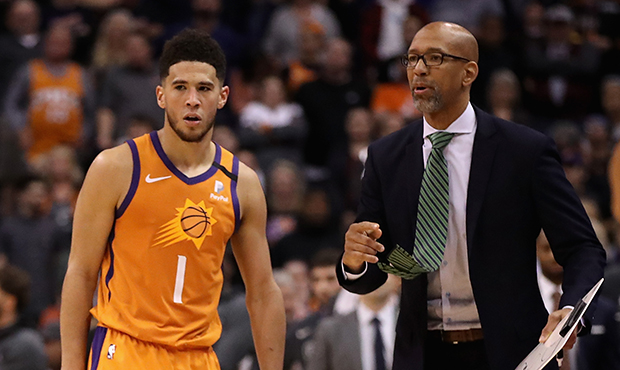
Head coach Monty Williams of the Phoenix Suns talks with Devin Booker #1 during the second half of the NBA game against the Orlando Magic at Talking Stick Resort Arena on January 10, 2020 in Phoenix, Arizona. The Suns defeated the Magic 98-94. (Photo by Christian Petersen/Getty Images)

The Phoenix Suns haven’t made the playoffs for a decade, the second-longest active drought in the NBA and one of the worst overall across the four major professional sports in the United States.

After a strong offseason, the Suns are projected to break that streak, which is more than enough to celebrate.

Head coach Monty Williams, though, is leading a Phoenix team unlike any in the franchise’s 52-year history.

That’s not to say this will be one of the top teams over that half-century, but it’s different in a couple of exciting ways.

Let’s take a journey by combing through that history while comparing the 2020-21 Suns to it. Here are a few of the unique traits for this coming year’s team:

All statistics via NBA.com and Basketball-Reference

Ball-handler firepower

(Photo by Christian Petersen/Getty Images)

Have the Suns had better teams when it comes to star power? Absolutely. Without question.

The combination of Steve Nash and Amar’e Stoudemire benefitted from mutual symmetry on top of their own individual brilliance. There were still independent dual-destructive forces like Charles Barkley and Kevin Johnson, along with a Big 3 before it was cool to have a Big 3 in Alvan Adams, Walter Davis and Paul Westphal.

Those three are far ahead of this upcoming team.

But what about a ball-handler duo? What — and I should preface this with a gag warning — you pictured when hearing about the Backcourt 2000 duo of Jason Kidd and Penny Hardaway?

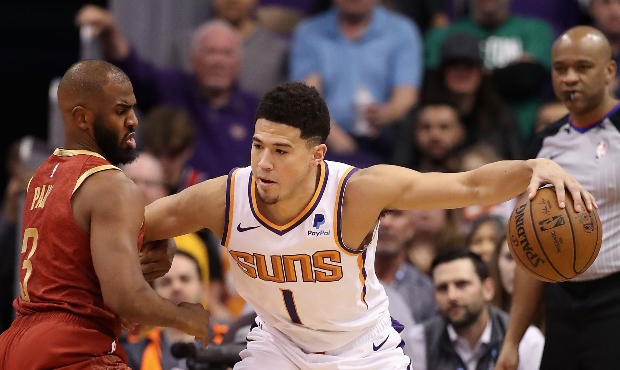
More simply, a backcourt that can do everything you wish of a primary initiator in an offense. Has there been one better than Chris Paul and Devin Booker?

I think not!

For the sake of argument, let’s try our best to find these other complete ball-handlers in franchise history.

We want someone who can run the show, providing for teammates at a high rate, excelling in a similar way with how they score. And we want efficient buckets too. None of that chucking nonsense.

There’s no fool-proof way to do it statistically, but we’ll try with just three numbers.

We will eliminate three-point percentage, but still reward it by including true shooting percentage, incentivizing the most effective of scorers.

Instead of assists per game, we will go with assist percentage, a better encapsulation of the playmaking load these guys take on for the whole team.

For production, I nominate player efficiency rating (PER), a flawed metric on its own, but one that’ll quickly whittle anyone out who isn’t, well, productive.

Here are the three qualifiers: AST% of at least 30%, a TS% of at least 60% and a PER of at least 20.5.

For reference, Paul last season was 34.0%/61.0%/21.7 and Booker was 30.0%/61.8%/20.6. And remember, even if those two weren’t teammates last year and the dynamic between them isn’t a foregone conclusion, Paul did his sharing in OKC with two other ball-handlers and the same goes for Booker with Ricky Rubio.

Back to our results. Our winners: Steve Nash (six times!) and Kevin Johnson (three times). So, technically, the Suns had that backcourt at one point! Just not when they were both at that level.

But that’s it. Other really, really great players in franchise history don’t come close when you’re talking about true guard skills, the expert craftsmanship in facilitating while scoring methodically.

If we bump the qualifiers way down — let’s go 5% lower for each — we get a couple more K.J. seasons and three nods for Westphal, plus an appearance a piece for Goran Dragic (2013-14) and Eric Bledsoe (16-17).

Taking the AST% to 20% gets us our first pair of teammates, and what was likely your first guess, the late 70s and early 80s runs with Westphal and Davis we already mentioned.

To get our admission rate up and some other duos in the door, going to 20 AST%/50 TS%/17.0 PER, there pops Westphal and Adams in the mid-70s, K.J. and a 33-year-old Davis (!) in the late 80s and the Johnson-Jeff Hornacek tandem that followed. Then there are other Johnson backcourt partners like Elliott Perry (!!), Sam Cassell and Jason Kidd before the arrival of Hardaway alongside Kidd (BACKCOURT 2000!!!!!).

Our modern wing of duos includes the 48-win 2013-14 team led by Dragic and Bledsoe, and then, yes, Bledsoe and Isaiah Thomas, who only did so before the trade deadline frenzy in February 2015. It was working! They should have kept them together!

I will accept all arguments coming my way that contest Paul and Booker as the best backcourt the Suns have ever had, and I could be wrong, but it’s a claim I’m willing to make if Paul is within range of the Second-Team All-NBA Point God Reunion Tour form he captured in Oklahoma City last season.

The value of inexperience

(Kim Klement/Pool Photo via AP)

Zooming out a ways to go more full scale … Not that far out. Take us back in a little bit. Liiiitle more. There we go. Better.

Now that the big dogs are out of the way, let’s look at roster construction.

This team is going to get better as the season goes on in a way few can compare to because of experience. Well, actually, inexperience.

Deandre Ayton, Mikal Bridges and Cam Johnson will likely be among the team’s top-six in minutes per game, with Johnson entering his second season while the 2018 draft class starts year three.

There have been 29 playoff teams in franchise history, and in only two of those seasons have three Suns players finished in the top-six of minutes per game that did not yet have three years of experience. Again, that’s three players entering either season one, two or three of their careers that finished top-six in minutes per game.

So who were the two? They’re rather noteworthy answers.

Firstly, that would be the 55-win, Western Conference finalist 1988-89 Suns with Johnson (second year, 39.2 MPG), Hornacek (third year, 31.9 MPG), Armen Gilliam (second year, 28.6 MPG) and Dan Majerle (rookie, 25.1 MPG).

The other? The 1977-78 gang, another featuring franchise icons in their beginnings like Davis (rookie, 32.0 MPG) and Adams (third year, 27.3 MPG), along with Ron Lee (second year, 23.5 MPG).

Booker doesn’t even make the cut entering his sixth year, but he won’t turn 25 until next October, making him younger this season than Hornacek, Gilliam and Lee were for those respective teams.

This could be one of the best young teams the Suns have ever had in terms of the level of contribution outta the kiddos for a playoff team.

And youth is a common theme across these all-time great Suns teams, including the nine conference finals trips in total for the franchise.

The 1993 NBA Finals team had rookie Richard Dumas. A first-year Adams was a stud immediately for the 1976 finals run, and ditto for Davis in his second season (1978-79). Larry Nance blossomed in his third year (1983-84), we already hit on 1988-89 and that carried over to 1989-90.

Even role players like Cedric Ceballos (1992-93), Jared Dudley (2009-10), Joe Johnson (2004-05) and Boris Diaw (2005-06) gave those terrific groups an extra push.

The 2020-21 Suns can get that from the top of their roster (Booker and Ayton) to the core (Bridges and Johnson). And in what’s an unknown for them, there are big-time improvements that could be coming from any of those four.

Shooting, shooting, shooting

(Photo by Mike Ehrmann/Getty Images)

Stylistically for this team, the most obvious area to spotlight is shooting.

Looking at last season’s numbers, including Cameron Payne’s eight-game sample size and Jalen Smith’s sophomore year at Maryland, the Suns have 11 certified three-point shooting threats on their roster who shot at least 35% from deep.

Everyone who is projected to play in the rotation except for Jae Crowder is in that cluster, as Crowder’s volatile percentages can have him go from 29.3% in Memphis to 44.5% in Miami over the course of one season. Let’s say the Suns get closer to Miami Crowder than Memphis, then that’s a full dozen good shooters.

If someone was crazy enough to add up the over 2,400 attempts those guys took across different teams, they’d land on a three-point percentage as a 12-man unit of 37.2%.

That’s a top 10 mark in franchise history. But the groups above it in the rankings aren’t really comparable based on the sheer volume of treys this group will be hucking up. For goodness sake, Cotton Fitzsimmons’ 1991-92 bunch attempted only 7.3 threes a game. Cam Johnson might break that on his own this season after posting 7.8 per 36 minutes as a rookie.

The best team to line up comparatively is the 2005-06 team, which shot 39.9% on 25.6 threes a game and had eight players by the end of the season taking at least a pair a night. That, also, was after mid-season acquisitions Jim Jackson and Tim Thomas joined the fray.

Six of those eight Suns converted at least 38% of their attempts, including current general manager James Jones. Playing with Steve Nash in that Mike D’Antoni madness, of course, an overwhelming majority of those shots were catch-and-shoot looks.

Given Booker and Paul will be playing off each other more with the big fella sucking the defense into the middle, there are notable increases that should be coming via more catch-and-shoot looks to bump up that three-point percentage. Which, duh, of course. But stick with me.

The three players on this season’s team with the highest usage percentages last year have discernible jumps from overall three-point percentage to catch-and-shoot three-point percentage: Booker (35.4% to 39.3%), E’Twaun Moore (37.7% to 41.2%) and Paul (36.5% to 42.3%).

Add in Jevon Carter, Langston Galloway and Cam Johnson’s marks all hitting at least 39% overall and we’ve tidily matched those six from the 2005-06 squad. I snuck that up on ya, didn’t I?

So, the quantity of shooters is a landslide, and the quality of shooters isn’t all that far off. We didn’t even get to Ayton yet, who could see the team reach a baker’s dozen of snipers if he walks the walk he’s been talking about extending his range.

And going back to his 11 teammates, would you be able to guess who had the worst percentage last season? Why, yes, it is Booker. How’d you know? What’s that? I wouldn’t have asked otherwise? Ah, touche, reader. Touche. Just having a conversation with an imaginary reader. Nothing to see here.

Any way you stack it, this will be the Suns’ most versatile shooting team ever, and probably one of the best.

Defensive build

(Photo by Mike Ehrmann/Getty Images)

How about defense? Yes! That other part of basketball! The one the Suns haven’t been top-10 in for 18 seasons!

We have to travel back to the 2002-03 season to find it, and they squeaked in at 10th for defensive rating, the amount of points a team allows per 100 possessions.

It’s the other half of the game Suns teams have rarely ever been known for, but this could be one of the exceptions.

After Phoenix finished top-10 in defensive rating for five straight seasons from the late 80s to early 90s, culminating with the NBA Finals run, it was a two-year blip at the turn of the millennium as one of the league’s best.

That’s the last time Phoenix had a truly great defensive team, and a good example to weigh up against this roster.

The 1999-2000 Suns were third in defensive rating and then second the following season. The team was led by head coach Scott Skiles, who replaced Danny Ainge 20 games into that 1999-2000 campaign.

Over that two-year stretch, there were key attributes that this year’s group shares.

Jason Kidd was at the helm of those teams, firmly entering the prime of his late 20s. He had earned First Team NBA All-Defense the season prior, and then made the second team with forward Cliff Robinson for that 1999-2000 run. It’s the only time in franchise history two Suns players received an All-Defense nod the same season.

Kidd was the leader and voice at point guard, and while Paul is beyond his peak as a defender, he’s tied with Kidd for sixth all-time in All-Defense Teams made with nine.

The versatility from Robinson and a young Shawn Marion is where Bridges comes up, and the toughness through Tom Gugliotta and Rodney Rogers is a modern-day comp for Crowder.

Ayton is the key differentiator and the piece that will likely swing how good (or bad) this season’s Suns defense is, as his speed at his size gives him an almost immeasurable ceiling as a defender.

He has the ability to switch out and stick on guards, what he was best at as a rookie. Ayton grew in year two as an anchor, showing a much better feel for his positioning defending ball screens. He improved with his spacing between the ball-handler, his man and the rim.

Marion is the only comparable defender the organization has had when looking at what’s possible for Ayton’s versatility. This is the only part of this exercise where we’ll go into projectables, but if Ayton improves in his third season at the same rate he did over his first two, this will be Phoenix’s first good defensive team in nearly two decades.

And if he makes a big jump, one that should be borderline expected of a player with his talent, it will be a great defensive team.

Let's block ads! (Why?)


"like this" - Google News
December 01, 2020 at 11:59PM
https://ift.tt/3lqSOdZ

Phoenix has never seen a Suns team like this one before - Arizona Sports
"like this" - Google News
https://ift.tt/2MWhj4t
Shoes Man Tutorial
Pos News Update
Meme Update
Korean Entertainment News
Japan News Update

Who are Maryland’s electors? Must they vote for Biden? Here’s what to know about the process. - Baltimore Sun

adanyabegini.blogspot.com

Unfortunately, our website is currently unavailable in most European countries. We are engaged on the issue and committed to looking at options that support our full range of digital offerings to the EU market. We continue to identify technical compliance solutions that will provide all readers with our award-winning journalism.

Let's block ads! (Why?)


"here" - Google News
December 01, 2020 at 05:03PM
https://ift.tt/2HXy9AF

Who are Maryland’s electors? Must they vote for Biden? Here’s what to know about the process. - Baltimore Sun
"here" - Google News
https://ift.tt/2z7PfXP
https://ift.tt/2Yv8ZPx
Search

Featured Post

'Kind of the first time we've had an estimate like this': first CDC study on mold finds it's much deadlier than we thought - Fortune

[unable to retrieve full-text content] 'Kind of the first time we've had an estimate like this': first CDC study on mold finds i...

Postingan Populer