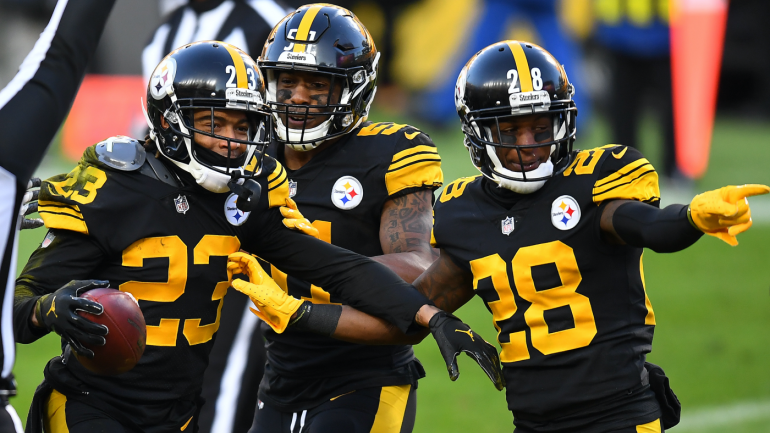
Three weeks ago, the Pittsburgh Steelers became the first team in franchise history to win their first eight games. In Week 10, Pittsburgh became the NFL's first 9-0 team since the 2015 Panthers. On Wednesday (yes, Wednesday), the Steelers stayed undefeated after completing a season sweep of their AFC North rival Ravens. The NFL's last undefeated team, the Steelers currently have a one-game lead over the defending champion Chiefs for the race to secure the AFC's No. 1 seed. They also have a three-game lead over the Browns for first place in the AFC North.
Since the start of the Super Bowl era, 13 teams, including the 2020 Steelers, have won at last 11 games before losing their first game. Out of those teams, nine reached the Super Bowl, with five teams ending the year with the Vince Lombardi Trophy.
Here's a look at each 11-0 NFL team since the start of the Super Bowl era.
While it's way too early to predict the Steelers' playoff fortunes, Pittsburgh's depth at various positions should enable them to withstand possible injuries better than most clubs. It will also give them more versatility as it relates to their possible playoff matchups.
One-dimensional teams seldom win the Super Bowl; just ask the '84 Dolphins, whose prolific passing attack was not able to deliver a third Lombardi Trophy to Miami. Conversely, the '06 Colts, after falling short of their goal the previous season, received vastly better play from their defense that allowed them to win the franchise's first title since moving from Baltimore to Indianapolis.
Pittsburgh's 1978 team, whose 7-0 start stood as the franchise's best mark until being passed by the current team, is another example of a team that possessed a complete team in all three phases. The Steel Curtain defense, albeit a little older, was still the league's most dominant unit. Pittsburgh's offense received a career year from quarterback Terry Bradshaw, who that season became the first and last Steeler to win league MVP. And while Bradshaw and the passing game was the focal point of the offense, Bradshaw certainly did not forget about his talented backfield duo of Franco Harris and Rocky Bleier, who both scored touchdowns during Pittsburgh's 35-31 win over Dallas in Super Bowl XIII.
The right arm of quarterback Ben Roethlisberger has been the Steelers' main mode of transportation on offense. Roethlisberger may be edged by Alex Smith for Comeback Player of the Year, but he is currently a front-runner to win league MVP. In Wednesday's 19-14 win over the Ravens, Roethlisberger attempted a season-high 51 passes, completing 71% of his throws despite several drops by his receivers. Monday's game against Washington may help further determine which quarterback takes come Comeback Player of the Year honors.
While they anything but perfect on Wednesday, the Steelers did enough to stay undefeated. Facing a Ravens team that was without a host of significant players (including reigning MVP Lamar Jackson), the Steelers committed two turnovers while going just 1-of-4 in the red zone. Pittsburgh's defense allowed two splash plays: a 39-yard run by quarterback Robert Griffin III and a 70-yard touchdown pass from Trace McSorley to Marquise Brown. On special teams, Chris Boswell missed his fourth extra point of the season, while Ray-Ray McCloud muffed punt set up the Ravens' first touchdown.
Despite the miscues, the Steelers received several strong individual performances. T.J. Watt racked up two of Pittsburgh's three sacks. Joe Haden's pick-six of Griffen got the Steelers on the board. Benny Snell, playing in relief of James Conner, racked up 93 total yards on 19 touches. J.C Hassenauer, who had just 42 career regular season snaps prior to Wednesday, filled in for Maurkice Pouncey after the eight-time Pro Bowl center was placed on the team's reserve/COVID-19 list hours before kickoff. James Washington's clutch third-down catch on the game's final possession helped put the game on ice.
"We don't have to reinvent the wheel," Steelers coach Mike Tomlin said when asked about his team's struggles on Wednesday. 'It's not some transformational thing that needs to transpire. We've got to coach better and play better when we get inside the bowl. So I expect our team to play better on Monday night."
Can the Steelers go undefeated? They have the talent to do so, but health will likely play a significant role in that coming to fruition. The Steelers are dealing with a new injury after outside linebacker Bud Dupreereportedly suffered a torn ACL during Wednesday's win. Pittsburgh will also have to overcome its current challenge of playing three games in a 12-day span.
"It has been a very challenging last few days," Roethlisberger told the media after Wednesday's game. "Mentally, we're getting into that mental warfare, if you will. Proud of the way the guys won the game today, but we've got to get ready to keep going."
"here" - Google News
December 03, 2020 at 10:46AM
https://ift.tt/33B8GV2
Steelers undefeated: Here's a look at the other 12 teams that started 11-0 in Super Bowl era - CBS Sports
"here" - Google News
https://ift.tt/2z7PfXP
https://ift.tt/2Yv8ZPx
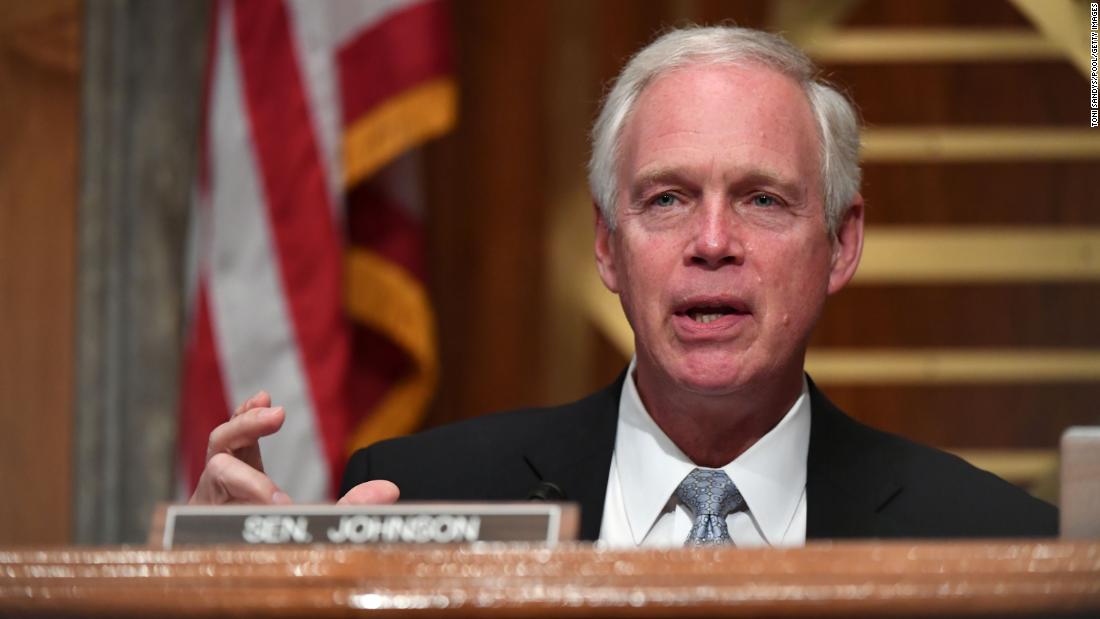
"I want to see what he's backing it up with," the Wisconsin Republican told CNN's Manu Raju. "I want to see what he's looked at." Why? Oh, because Johnson has seen lots of "irregularities" and "there's enough suspicions."
Riiiiight.
So just to be crystal clear about what Johnson, a United Statessenator, is saying here: In order for him to believe the attorney general that there was no widespread election fraud, he will need proof of said lack of election fraud.
Which, well, mind-boggling right? Unless Barr is able to prove -- with evidence! -- that election fraud didn't occur, well, then it must have occurred! Because if it hadn't, where's the proof that it didn't? Huh? Betcha can't answer that one!
That is a safe bet, of course. Because you can't provide evidence of something that didn't happen. I suppose Barr could point to the vote counts in all 50 states, none of which have reported any evidence of anything close to the vote fraud that Trump -- and, by extension, Johnson -- is suggesting.
But at this point, even that won't satisfy the likes of Johnson and Trump. Because they are deepdown the rabbit hole here. Machines were programmed to flip votes from Trump to Biden! Trump votes were dumped in rivers! And burned! Republican poll watchers weren't allowed into voting places!
That all of these ridiculous claims have been thoroughlydebunked doesn't matter. Because, like all good conspiracy theories, this one only grows larger the more that facts accumulate against it. So now Barr is in on this whole conspiracy, its proponents think, and the broader Department of Justice. (Trump, literally, said that on Sunday: "And how the FBI and Department of Justice -- I don't know. Maybe they are involved.") And the late Hugo Chavez! This thing goes deeper than any of us even imagined!
This is all ridiculous. But you likely already knew that. Johnson is asking Barr, Trump's handpicked appointee as the nation's top cop, to prove a negative. As if the onus on election fraud -- which has NEVER been proved to have happened in any sort of large-scale way -- is on those who say it didn't happen in last month's vote. And not on those making the HUGE claim that the election was somehow either rigged, stolen or both.
That this is coming from Johnson isn't terribly surprising.
After all, Johnson is the one who accused Google of purposely targeting liberal voters with "get out the vote" messages in the run-up to the election -- a move that "could shift millions of votes." (Tech experts say that didn't happen.)
"Every premature death is a tragedy, but death is an unavoidable part of life. More than 2.8 million die each year -- nearly 7,700 a day. The 2017-18 flu season was exceptionally bad, with 61,000 deaths attributed to it. Can you imagine the panic if those mortality statistics were attributed to a new virus and reported nonstop?"
Well, that sure aged well! Not.
Let's be honest: There's nothing that would convince Johnson that he's wrong in his unfounded conspiracy theories about the election. Because this isn't about facts. It's about opinions -- and badly ill-informed ones at that.
Christmas is right around the corner and many are opting for real Christmas trees this year.
“We’ve never seen a year like this one, the people out there need some entertainment, some enjoyment, some festivity,” says Carl Holloway, Co-Owner of Holloway's Tree Farm in Nipomo.
Holloway said their farm has been setting records this year.
“We haven't been able to keep up with people and the number of trees coming through, last weekend we sold over 600 trees a day for a total of over 2,000 trees over a 3 day weekend," says Holloway.
Many say that after years of buying artificial trees, they are making the switch this year.
Nipomo resident, Mary Stackhouse said this is the first year she purchased an authentic tree.
"After the pandemic I was like you know what let’s keep things local, let's keep the families here in business so I'd rather put our money and our fun with the boys to good use," she says.
Others say they are living out tradition. Dave Rippy says his family cuts down their Christmas tree every year.
"…they last longer, they are fresher, they smell great…we can smell it right now and it’s been kind of a family tradition," says Rippy.
According to Holloway, they have taken action this year to make sure their farm is as sanitary as possible.
"It’s all COVID sanitized about 4 times a day, we have hand wash stations and everything..and we are doing pretty well, we monitor the employees everyday, ask them all the pertinent questions," says Holloway.
Holloway's Tree Farm says they are anticipating selling out of trees by around December 6th.
The famous mushroom cut. Photo: Tim Graham/Tim Graham Photo Library via Getty Images
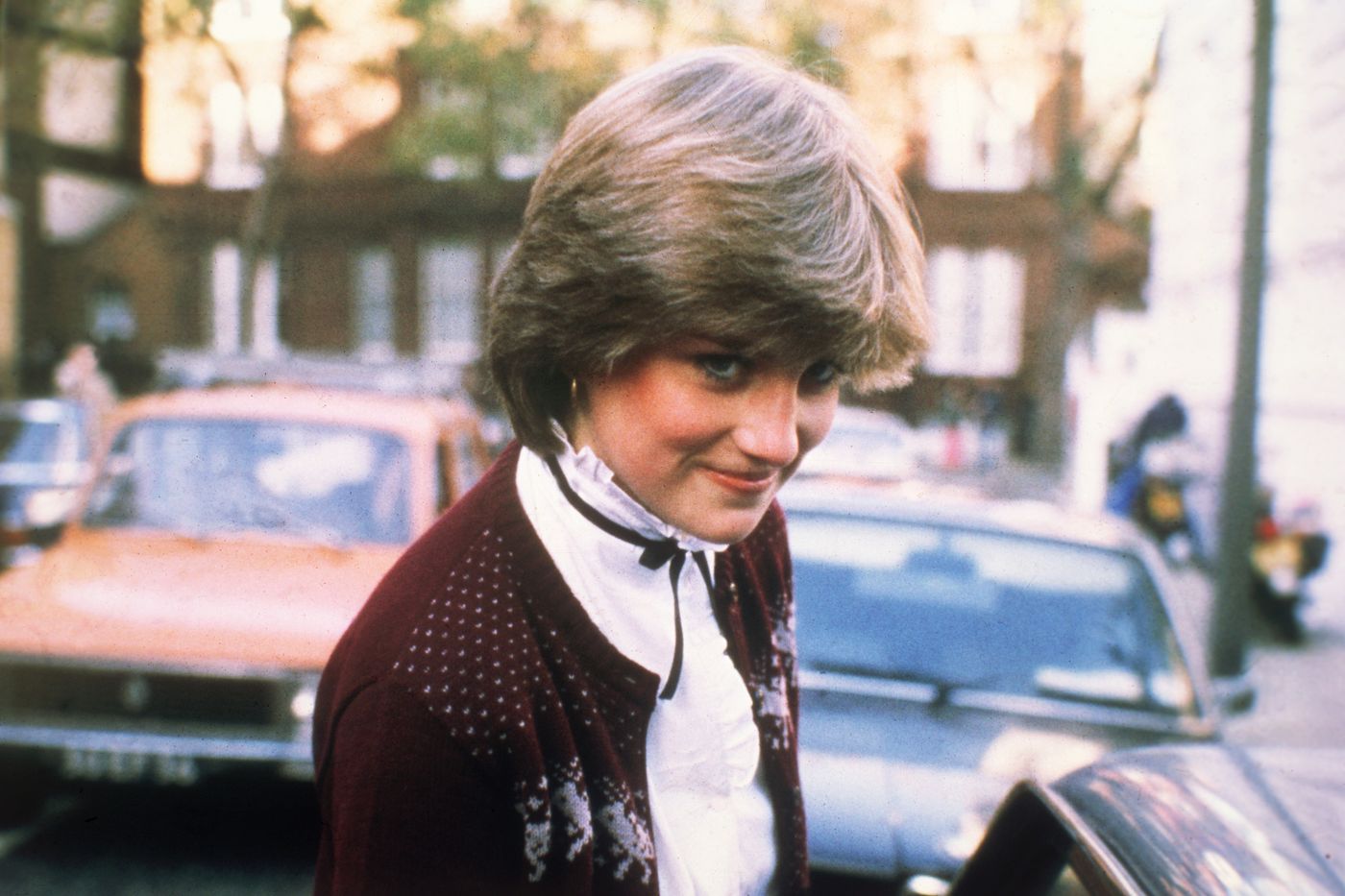
The latest season of The Crown has prompted a renewed obsession with all things Princess Diana, including her hair. At the time, the cut sent thousands of women rushing to the hairdresser requesting the … what would you call it exactly? A feathery mushroom? A more feminine mop top? Emma Corrin, who plays Diana in season four recently compared her character’s hair to a Wham!-era George Michael.
But while Di’s do may seem like just another example of inexplicable ’80s fashion, the truth is that, even back then, it was an outlier — out of step with the era’s bigger/blonder/longer ethos (see Dynasty, Duran Duran videos) and definitely not what we tend to think of as princess hair, i.e., long and flowing and easily braided for those “Help! I’m stuck in the top of a tower!” emergencies. So how did this improbable style become a standard of beauty and sophistication?
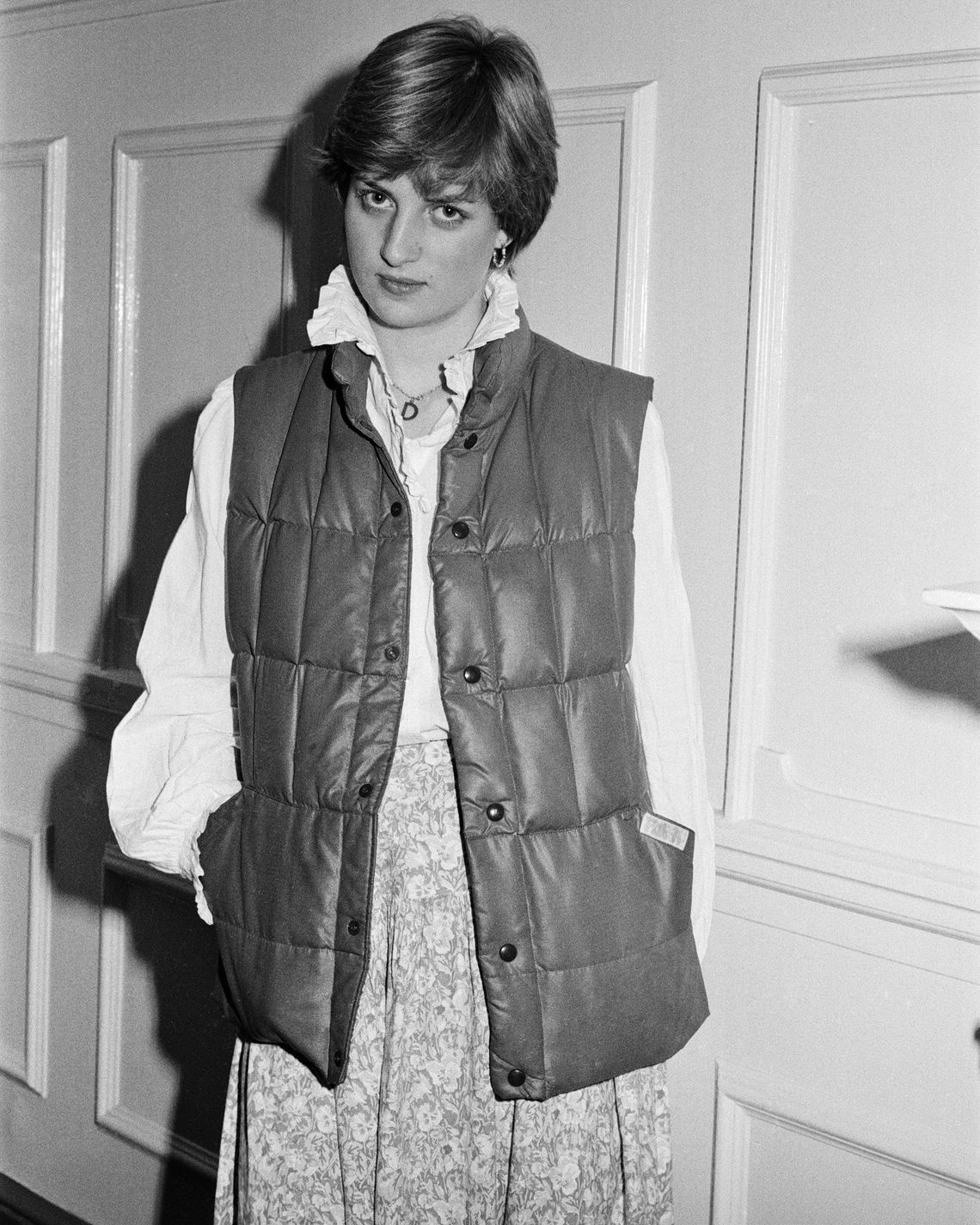
“You have to remember who she was before — Diana was what we would have called a Super Sloane,” says Peter York, the British journalist who literally wrote the book on the Sloane Rangers, a tribe of English arch-preppies specific to the Chelsea neighborhood where Diana Spencer was living when she met her future hubby. Sloanes worshipped all things classic and conservative, they “ate jelly with a fork,” “cried while singing Christmas carols” (actual dicta from the Sloane Ranger handbook), and paid little attention to anything so garish as popular culture.
Everything about this 1980 look is pure Sloane Ranger. Photo: Central Press/Getty Images
A female Sloane, says York, didn’t aim to look sexy, or at least not in the va-va-voom sense. “The idea was healthy simplicity. A certain amount of dressed-downness, a certain sort of upper ruralness.” Any hint at effort was antithetical to the Sloanes’ central charade, which, in contemporary terms, was all about zero fucks given. A half-century before Instagram, Sloanes #wokeuplikethis. Hashtag navy, hashtag burgundy, hashtag tweed, hashtag nonewfriends.
In episode two of the new season, “The Balmoral Test,” we learn that the Windsors (Sloanes on steroids) have an actual hazing ritual in which outsiders are invited to the queen’s residence in the Scottish highlands to see if they sink or swim — both figuratively and in the actual muck. Margaret Thatcher’s visit is a total disaster, marked by her audacity to arrive sans work boots and walking stick. When Diana arrives a few days later, it’s a different story. “I only brought outdoor shoes,” she trills before heading out on an early morning stag hunt with Prince Philip. When the pair returns from hours in the freezing wet, Di’s lid looks like the fifth Beatle, but her future in the royal family is sealed.
The irony is rich: Thatcher, an actual working-class person, is too busy doing actual work to take pleasure in her hosts’ pioneer pantomime antics, whereas Diana, an earl’s daughter, is fluent in the customs and coded language of the country snob. (Can somebody please explain the rules to Ibble Dibble?)
“This was pre-tabloid culture. Ordinary people didn’t know about Sloanes,” says York, explaining how an Über-bougie cult of overprivileged L.L.Bean worshippers could exist in near-complete segregation from the masses. That all changed overnight as the press started to gather outside Diana’s flat, and suddenly Sloane style was seen “galloping down high street.” It’s ironic, York adds, because if Diana had just moved to the country with a low-key aristocrat like most Sloanes, she would have adopted a Sloane-mum hairstyle — longer and pushed back with a velvet hairband. Instead, she married a prince, and her look — as common as a brass-buttoned blazer in her peer group — became a totally singular statement.
Another Sloane moment from 1980. Photo: Carl Bruin/Sunday Mirror/Mirrorpix/Getty Images
“One of the things that was so associated with Diana was this idea of being hidden in plain sight — her hair was a big part of that,” says Linda Wells, the founding editor of Allure who was working at Vogue when Lady Spencer became the Princess of Wales. The shape and the blondness made her instantly identifiable, but with the long layers at the front, her hair would cover her face when she bowed her head and then part like curtains when she looked up. Diana’s natural ability to steal any spotlight was clearly a sore spot (see Charles’s repeat hissy fits) but also a superpower that she wasn’t willing to part with.
“It seems like maybe her hair was her way of holding on to herself,” says Wells. “We can exaggerate these things, but at the same time, I think women really do express themselves with their hairstyles, especially when they can’t express themselves in other ways.”
See Thatcher’s steely resolve (brought to you by loads of hair spray) or Meghan Markle’s messy bun — an early sign of the messiness to come. As Diana went from eager-to-please newlywed to miserable captive, her hair became less like curtains and more like a steely fortress. And then, in 1991, a new look for a new life. “It was like she was stripping away the excess, like it wasn’t such a weight on her,” says Wells. And yes, as noted, armchair hair psychology has its limitations, but in this case, we have confirmation from the princess herself, whose secret recordings (first made public in the 2017 Netflix doc, Diana: In Her Own Words) include a question about when she went from feeling like a victim to a victor. Her answer: “I suppose last summer, when Sam cut my hair differently, it let out something quite different.”
Sleeker and shorter in the ’90s. Photo: Mirrorpix/Getty Images
Sam is Sam McKnight, the stylist to the stars responsible for Diana’s series of ’90s makeunder chops. When he first met the princess, she had gone full on “Dynasty Di” — perm, teasing, and big, chunky highlights. “The idea was almost to start again, to do something that was stronger, more casual, more her,” says McKnight, who had no idea, at that point, that a divorce was in the works. He continued to style the princess’s hair until her death in 1998, including the epic 1997 Vanity Fair cover, on which we see a sleeker, modernized version of a familiar mushroom.
Did she ever consider going long? No, says McKnight, perhaps because the whole long-locks thing would have been “too princess-y,” but also because the People’s Princess understood her power: “She knew that people wanted to see ‘Princess Diana,’ so that’s what she gave them,” McKnight says. Turns out she never needed the fairy tale — just a good flattening iron.
"I want to see what he's backing it up with," the Wisconsin Republican told CNN's Manu Raju. "I want to see what he's looked at." Why? Oh, because Johnson has seen lots of "irregularities" and "there's enough suspicions."
Riiiiight.
So just to be crystal clear about what Johnson, a United Statessenator, is saying here: In order for him to believe the attorney general that there was no widespread election fraud, he will need proof of said lack of election fraud.
Which, well, mind-boggling right? Unless Barr is able to prove -- with evidence! -- that election fraud didn't occur, well, then it must have occurred! Because if it hadn't, where's the proof that it didn't? Huh? Betcha can't answer that one!
That is a safe bet, of course. Because you can't provide evidence of something that didn't happen. I suppose Barr could point to the vote counts in all 50 states, none of which have reported any evidence of anything close to the vote fraud that Trump -- and, by extension, Johnson -- is suggesting.
But at this point, even that won't satisfy the likes of Johnson and Trump. Because they are deepdown the rabbit hole here. Machines were programmed to flip votes from Trump to Biden! Trump votes were dumped in rivers! And burned! Republican poll watchers weren't allowed into voting places!
That all of these ridiculous claims have been thoroughlydebunked doesn't matter. Because, like all good conspiracy theories, this one only grows larger the more that facts accumulate against it. So now Barr is in on this whole conspiracy, its proponents think, and the broader Department of Justice. (Trump, literally, said that on Sunday: "And how the FBI and Department of Justice -- I don't know. Maybe they are involved.") And the late Hugo Chavez! This thing goes deeper than any of us even imagined!
This is all ridiculous. But you likely already knew that. Johnson is asking Barr, Trump's handpicked appointee as the nation's top cop, to prove a negative. As if the onus on election fraud -- which has NEVER been proved to have happened in any sort of large-scale way -- is on those who say it didn't happen in last month's vote. And not on those making the HUGE claim that the election was somehow either rigged, stolen or both.
That this is coming from Johnson isn't terribly surprising.
After all, Johnson is the one who accused Google of purposely targeting liberal voters with "get out the vote" messages in the run-up to the election -- a move that "could shift millions of votes." (Tech experts say that didn't happen.)
"Every premature death is a tragedy, but death is an unavoidable part of life. More than 2.8 million die each year -- nearly 7,700 a day. The 2017-18 flu season was exceptionally bad, with 61,000 deaths attributed to it. Can you imagine the panic if those mortality statistics were attributed to a new virus and reported nonstop?"
Well, that sure aged well! Not.
Let's be honest: There's nothing that would convince Johnson that he's wrong in his unfounded conspiracy theories about the election. Because this isn't about facts. It's about opinions -- and badly ill-informed ones at that.
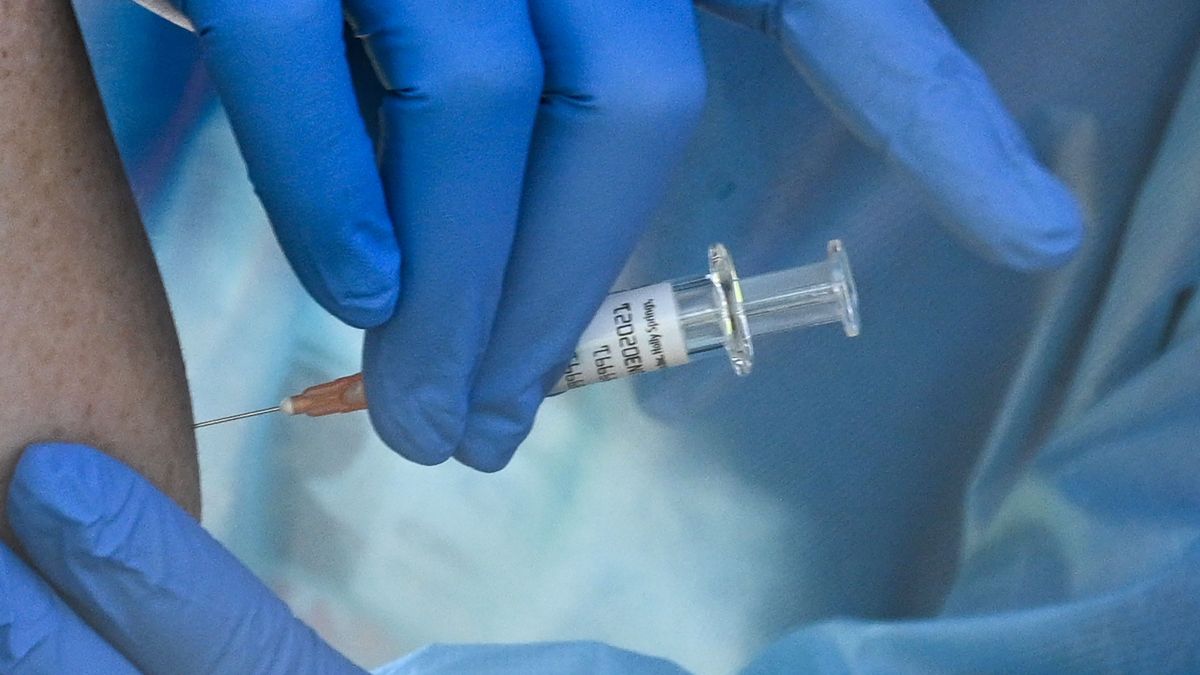
The first coronavirus vaccines could arrive in Massachusetts as early as this month, Gov. Charlie Baker said Tuesday, but it will take time to achieve widespread distribution.
It will likely be months before the general public can get vaccinated, based on plans the federal government and Massachusetts are finalizing this week to prioritize limited early supplies.
The first doses will likely be reserved for frontline health care workers, people over the age of 65 or with underlying health conditions and other essential workers. The state is preparing to submit its final plan for vaccine acceptance and distribution to the U.S. Centers for Disease Control on Friday.
The vaccines are designed for adults over the age of 18, Baker noted.
"The focus is going to be on the people we are all the most worried about, right, either because of what they do for work or because of their age or because of their physical condition," Baker said during a Tuesday press conference.
Download our free mobile app foriOS orAndroidto get the latest breaking news and in-depth coverage of COVID-19.
The Trump administration told governors on Monday to expect the first shipments of Pfizer's vaccine to begin arriving by mid-December, pending emergency use authorization from the Food and Drug Administration, Baker said.
The vaccine developed by Cambridge-based Moderna would be available "shortly after that," Baker added, who also said he did not think his administration would consider mandating vaccinations.
The head of the FDA Stephen Hahn was called to the White House Tuesday morning for a meeting on the Pfizer approval process, and the agency has a hearing scheduled Dec. 17 to discuss the Moderna application.
While the impending availability of a vaccine means there's "light at the end of the tunnel," Baker cautioned against thinking that FDA approval will mean that life can return to normal for the Christmas season.
The governor said it probably won't be until the spring that the general population begins to have access to a vaccine, at which point others being developed by AstraZeneca and Johnson & Johnson could also be available.
"It would probably be Q2 before just Joe Q or Jane Q Citizen would have access to a vaccine," Baker said.
The Pfizer and the Moderna vaccines require two doses, which must be administered three to four weeks apart.
"The thing to remember here is, even as the feds get into the business of following through on the distribution program that's attached to this, it's going to take awhile before people would literally start finishing the vaccine process itself and start to generate antibodies," Baker said.
The federal Advisory Committee on Immunization Practices recommend that health care workers and residents of long-term care facilities be the first to get vaccinated, the Washington Post reported, after voting on its priority vaccination guidelines during an emergency meeting Tuesday.
States do not have to follow the recommendations of the Centers for Disease Control panel, but many are expected to adhere to the general framework. Baker submitted a draft plan to the CDC in October based on the assumption that the state would receive between 20,000 and 60,000 initial doses.
That plan, which is being updated for final submission by Friday, prioritized health care personnel, adults over 65 and those with underlying health conditions and other essential workers.
Members of Operation Warp Speed speed are expected to give an update Wednesday.
State House News Service contributed to this report.