Rechercher dans ce blog

Saturday, October 1, 2022

‘The Fed is breaking things’ – Here’s what has Wall Street on edge as risks rise around the world - CNBC

adanyabegini.blogspot.com
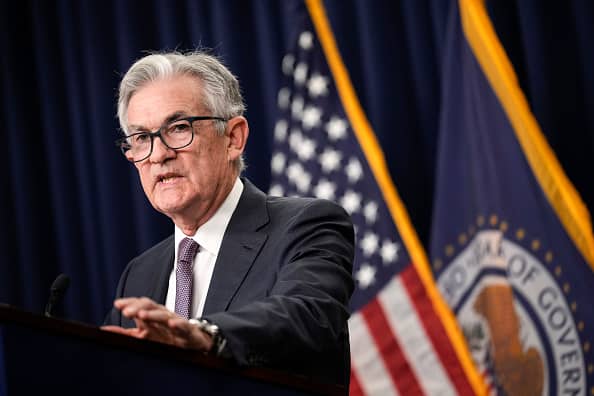
Jerome Powell, chairman of the US Federal Reserve, during a Fed Listens event in Washington, D.C., US, on Friday, Sept. 23, 2022.
Al Drago | Bloomberg | Getty Images

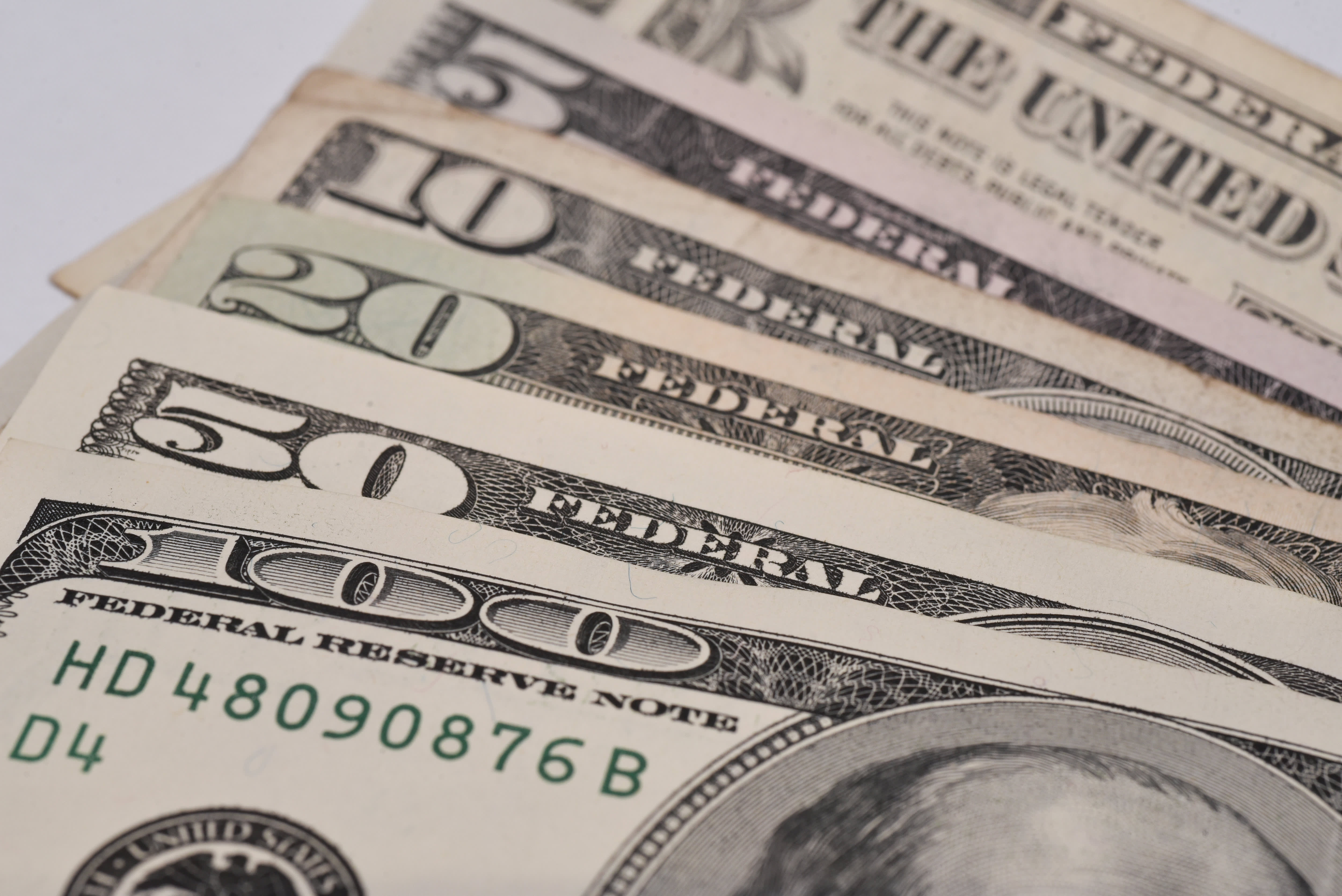
As the Federal Reserve ramps up efforts to tame inflation, sending the dollar surging and bonds and stocks into a tailspin, concern is rising that the central bank's campaign will have unintended and potentially dire consequences.

Markets entered a perilous new phase in the past week, one in which statistically unusual moves across asset classes are becoming commonplace. The stock selloff gets most of the headlines, but it is in the gyrations and interplay of the far bigger global markets for currencies and bonds where trouble is brewing, according to Wall Street veterans.

After being criticized for being slow to recognize inflation, the Fed has embarked on its most aggressive series of rate hikes since the 1980s. From near-zero in March, the Fed has pushed its benchmark rate to a target of at least 3%. At the same time, the plan to unwind its $8.8 trillion balance sheet in a process called "quantitative tightening," or QT — allowing proceeds from securities the Fed has on its books to roll off each month instead of being reinvested — has removed the largest buyer of Treasurys and mortgage securities from the marketplace.  

"The Fed is breaking things," said Benjamin Dunn, a former hedge fund chief risk officer who now runs consultancy Alpha Theory Advisors. "There's really nothing historical you can point to for what's going on in markets today; we are seeing multiple standard deviation moves in things like the Swedish krona, in Treasurys, in oil, in silver, like every other day. These aren't healthy moves."

Dollar's warning

For now, it is the once-in-a-generation rise in the dollar that has captivated market observers. Global investors are flocking to higher-yielding U.S. assets thanks to the Fed's actions, and the dollar has gained in strength while rival currencies wilt, pushing the ICE Dollar Index to the best year since its inception in 1985.

"Such U.S. dollar strength has historically led to some kind of financial or economic crisis," Morgan Stanley chief equity strategist Michael Wilson said Monday in a note. Past peaks in the dollar have coincided with the the Mexican debt crisis of the early 1990s, the U.S. tech stock bubble of the late 90s, the housing mania that preceded the 2008 financial crisis and the 2012 sovereign debt crisis, according to the investment bank.

The dollar is helping to destabilize overseas economies because it increases inflationary pressures outside the U.S., Barclays global head of FX and emerging markets strategy Themistoklis Fiotakis said Thursday in a note.

The "Fed is now in overdrive and this is supercharging the dollar in a way which, to us at least, was hard to envisage" earlier, he wrote. "Markets may be underestimating the inflationary effect of a rising dollar on the rest of the world."

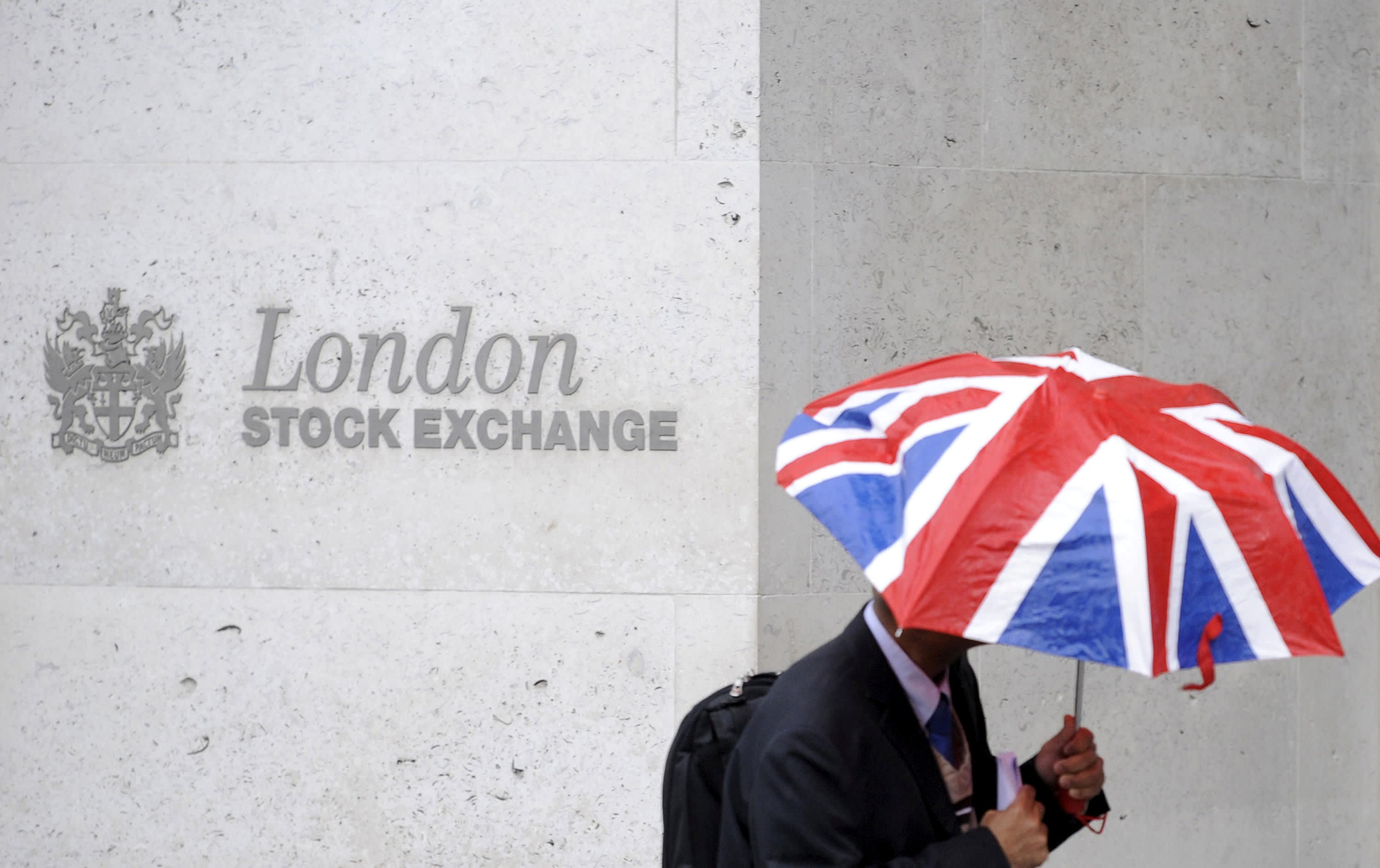
It is against that strong dollar backdrop that the Bank of England was forced to prop up the market for its sovereign debt on Wednesday. Investors had been dumping U.K. assets in force starting last week after the government unveiled plans to stimulate its economy, moves that run counter to fighting inflation.

The U.K. episode, which made the Bank of England the buyer of last resort for its own debt, could be just the first intervention a central bank is forced to take in coming months.

Repo fears

There are two broad categories of concern right now: Surging volatility in what are supposed to be the safest fixed income instruments in the world could disrupt the financial system's plumbing, according to Mark Connors, the former Credit Suisse global head of risk advisory who joined Canadian digital assets firm 3iQ in May.

Since Treasurys are backed by the full faith and credit of the U.S. government and are used as collateral in overnight funding markets, their decline in price and resulting higher yields could gum up the smooth functioning of those markets, he said.

Problems in the repo market occurred most recently in September 2019, when the Fed was forced to inject billions of dollars to calm down the repo market, an essential short-term funding mechanism for banks, corporations and governments.

"The Fed may have to stabilize the price of Treasurys here; we're getting close," said Connors, a market participant for more than 30 years. "What's happening may require them to step in and provide emergency funding."

Doing so will likely force the Fed to put a halt to its quantitative tightening program ahead of schedule, just as the Bank of England did, according to Connors. While that would confuse the Fed's messaging that it's acting tough on inflation, the central bank will have no choice, he said.

`Expect a tsunami'

The second worry is that whipsawing markets will expose weak hands among asset managers, hedge funds or other players who may have been overleveraged or took unwise risks. While a blow-up could be contained, it's possible that margin calls and forced liquidations could further roil markets.

"When you have the dollar spike, expect a tsunami," Connors said. "Money floods one area and leaves other assets; there's a knock-on effect there."

The rising correlation among assets in recent weeks reminds Dunn, the ex-risk officer, of the period right before the 2008 financial crisis, when currency bets imploded, he said. Carry trades, which involve borrowing at low rates and reinvesting in higher-yielding instruments, often with the help of leverage, have a history of blow ups.

"The Fed and all the central bank actions are creating the backdrop for a pretty sizable carry unwind right now," Dunn said.

The stronger dollar also has other impacts: It makes wide swaths of dollar-denominated bonds issued by non-U.S. players harder to repay, which could pressure emerging markets already struggling with inflation. And other nations could offload U.S. securities in a bid to defend their currencies, exacerbating moves in Treasurys.

So-called zombie companies that have managed to stay afloat because of the low interest rate environment of the past 15 years will likely face a "reckoning" of defaults as they struggle to tap more expensive debt, according to Deutsche Bank strategist Tim Wessel.

Wessel, a former New York Fed employee, said that he also believes it's likely that the Fed will need to halt its QT program. That could happen if funding rates spike, but also if the banking industry's reserves decline too much for the regulator's comfort, he said.

Fear of the unknown

Still, just as no one anticipated that an obscure pension fund trade would ignite a cascade of selling that cratered British bonds, it is the unknowns that are most concerning, says Wessel. The Fed is "learning in real time" how markets will react as it attempts to rein in the support its given since the 2008 crisis, he said.

"The real worry is that you don't know where to look for these risks," Wessel said. "That's one of the points of tightening financial conditions; it's that people that got over-extended ultimately pay the price."

Ironically, it is the reforms that came out of the last global crisis that have made markets more fragile. Trading across asset classes is thinner and easier to disrupt after U.S. regulators forced banks to pull back from proprietary trading activities, a dynamic that JPMorgan Chase CEO Jamie Dimon has repeatedly warned about.

Regulators did that because banks took on excessive risk before the 2008 crisis, assuming that ultimately they'd be bailed out. While the reforms pushed risk out of banks, which are far safer today, it has made central banks take on much more of the burden of keeping markets afloat.

With the possible exception of troubled European firms like Credit Suisse, investors and analysts said there is confidence that most banks will be able to withstand market turmoil ahead.

What is becoming more apparent, however, is that it will be difficult for the U.S. — and other major economies — to wean themselves off the extraordinary support the Fed has given it in the past 15 years. It's a world that Allianz economic advisor Mohamed El-Erian derisively referred to as a "la-la land" of central bank influence.

"The problem with all this is that it's their own policies that created the fragility, their own policies that created the dislocations and now we're relying on their policies to address the dislocations," Peter Boockvar of Bleakley Financial Group said. "It's all quite a messed-up world."

Correction: An earlier version misstated the process of quantitative tightening.

Adblock test (Why?)


"here" - Google News
October 01, 2022 at 07:23PM
https://ift.tt/uY3abIv

‘The Fed is breaking things’ – Here’s what has Wall Street on edge as risks rise around the world - CNBC
"here" - Google News
https://ift.tt/EiBSUfY
https://ift.tt/Ib32tMn

Red Sox’s Alex Cora says ‘I’ve never seen anything like this’ about Boston’s play vs. Blue Jays, division - MassLive.com

TORONTO — The Blue Jays have outscored the Red Sox 19-0 in the first two games of this three-game series. Boston lost 10-0 here at Rogers Centre on Saturday.

“The whole season. It’s been unreal to be honest with you,” manager Alex Cora said.

Yes, these two games are a continuation of what has happened all season. It has been ugly. The Blue Jays are 15-3 against the Red Sox with one game remaining between the two teams this season. They have outscored Boston an incredible 119-52, a negative-67 run differential for the Sox.

“I think it’s 0-8 in the second part of the season,” Cora said. “They just have dominated us in every aspect. We talk about their offense but we haven’t hit against them. We haven’t played well against them.”

The Red Sox have recorded just eight hits — all singles — in these two games. Meanwhile, the Blue Jays have crushed five home runs.

“There’s no excuses here,” Cora said. “We’re just getting — I can’t even say the word. I’d probably have to say it in Spanish. They have dominated us. That’s the bottom line. Tip your hat to them but we’ve got to be better. I know we have one more game against them but we talk about being better in the offseason and everything. It really doesn’t matter. Next year, we have to show up against the division because I’ve never seen anything like this.”

Boston dropped to 23-49 against AL East teams.

“They just dominated us this year,” Cora said. “Last year, we dominated two teams (Yankees, Rays) in the division in October when it mattered. But this year, we have absolutely been crushed in the division. The division is going to be good for a long, long time. And we’re going to be there.”

Cora discussed earlier Saturday why he thinks the Red Sox will be better in 2023.

The Red Sox have four games remaining, all against AL East opponents. They have one more game here Sunday against the Blue Jays, then wrap up their season with three games at Fenway Park against Tampa Bay.

“The effort is there. The results are not there,” Cora said. “We show up tomorrow and I would never doubt the way we prepare, the way we go about it. Right now, they’re playing better than us.”

Related Content

Might Red Sox extend J.D. Martinez a qualifying offer? DH talks ‘exciting, stressful’ free agency

Will Red Sox sign Xander Bogaerts, extend Rafael Devers? ‘I hope it happens,’ Devers says

Adblock test (Why?)


"like this" - Google News
October 02, 2022 at 06:30AM
https://ift.tt/Pr89B4m

Red Sox’s Alex Cora says ‘I’ve never seen anything like this’ about Boston’s play vs. Blue Jays, division - MassLive.com
"like this" - Google News
https://ift.tt/PGTBzHu
Shoes Man Tutorial
Pos News Update
Meme Update
Korean Entertainment News
Japan News Update

Here's How You Can Help Hurricane Survivors - FEMA

adanyabegini.blogspot.com

[unable to retrieve full-text content]

Here's How You Can Help Hurricane Survivors  FEMA

"here" - Google News
October 02, 2022 at 04:30AM
https://ift.tt/IpcJn2w

Here's How You Can Help Hurricane Survivors - FEMA
"here" - Google News
https://ift.tt/EiBSUfY
https://ift.tt/Ib32tMn

Cough and snore detection on the Pixel 7 will work like this - Android Police

Google may be pulling out all the stops to track your health while you're up, out, and about, but when it comes to while you're dozing off, it may have yet another trick to pull out of its bag. Sure, owners of the second-generation Nest Hub might have a dedicated radar system to detect bad sleep, and smartwatch wearers have other sensors that record tosses and turns, but those with a Pixel 7 (and perhaps other capable Pixels) may be soon be able to take note of their unrest with their microphones.

We've been reporting on how the Digital Wellbeing app appears to be preparing to support cough and snore detection with the implementation of a new API called Ambient Context. Now, we're getting a better idea of how the feature will actually look like and how it will work courtesy of Esper Technical Editor Mishaal Rahman.

Digital Wellbeing users who want to turn on the feature will see this screen, though the requesting party in actual cases will be Android System Intelligence, a system-level service that makes a ton of connections happen such as provisioning microphone audio data for use on the Pixel-exclusive Now Playing feature. The same thing is happening here, though this time, the client is the Digital Wellbeing app.

The short version of how your microphone data will be pipelined is that Android System Intelligence will maintain constant access to the microphone via the Sensor Hub and, when a noise event happens, wake up the CPU to interpret what's going on. Eventually, Digital Wellbeing receives the data plot from ASI and the audio never gets passed along. All of this should happen without generating too much strain in the battery department.

Third-party apps are currently unable to hold the permission that would grant them cough and snore data obtained through the Ambient Context API and the processes that it entails, but that could change as soon as Android 14. In the meantime, we're just waiting to test the efficacy of what Google has to offer with this mode of sleep tracking.

Adblock test (Why?)


"like this" - Google News
October 02, 2022 at 12:05AM
https://ift.tt/oe8JOrf

Cough and snore detection on the Pixel 7 will work like this - Android Police
"like this" - Google News
https://ift.tt/EDsxuUk
Shoes Man Tutorial
Pos News Update
Meme Update
Korean Entertainment News
Japan News Update

Trap game? Letdown? 'We don't talk like that' - Packers.com

GREEN BAY – The Packers are coming off an emotional, exhausting and dramatic win over an NFC contender, they're facing a backup quarterback, and they're off to London in a few days for the first international regular-season game in franchise history.

But don't go calling this a "trap game" or say the Packers are due for a letdown when the Patriots visit Lambeau Field on Sunday.

"No, because we don't talk like that in the locker room," quarterback Aaron Rodgers said. "That's outside the locker room. Nobody ever talks about letdowns or emotional setbacks or trap games or any of the codewords you guys (in the media) use.

"We have a standard of which we play and that's the standard. If it dips below that, we don't attribute that to anything other than the preparation we put in, the way we practiced and the focus for that game."

Head Coach Matt LaFleur was adamant this week the Packers would not be looking ahead to the London trip, because that's how "you get your (butt) whipped, bottom line."

There's also the matter of the opponent this week being coached by Bill Belichick, even if it's a backup in Brian Hoyer taking over at quarterback.

"With Belichick, week by week, they've got a game plan for you," veteran safety Adrian Amos said. "They know what you do well or what you don't do well, so they will try to attack that."

The Packers have plenty of respect for the veteran Hoyer. LaFleur's brother has coached him with two different teams and spoken very highly of him. Hoyer also filled in for the Bears against the Packers back in 2016 and had Chicago right in the game until leaving due to injury.

Rodgers mentioned he's gotten to know Hoyer, who spent two different stints as Tom Brady's backup in New England, over the years at the Kentucky Derby, where the two future Hall of Famers annually bring a contingent of friends together.

"He's a good dude," Rodgers said. "He's been around the league for a long time, obviously, and he's had some stretches as a starter with a lot of success. But he's around the league because he's smart, he knows the schemes that he's in and he can come in and execute as well as they want him to."

All that said, the Packers' history against backup quarterbacks in the Rodgers era is pretty good, as expected.

Adblock test (Why?)


"like this" - Google News
October 01, 2022 at 08:15PM
https://ift.tt/dgBFqDV

Trap game? Letdown? 'We don't talk like that' - Packers.com
"like this" - Google News
https://ift.tt/EDsxuUk
Shoes Man Tutorial
Pos News Update
Meme Update
Korean Entertainment News
Japan News Update

Party like it’s 1789! My weird, enlightening month living strictly by the US constitution - The Guardian

[unable to retrieve full-text content]

Party like it’s 1789! My weird, enlightening month living strictly by the US constitution  The Guardian

"like this" - Google News
October 01, 2022 at 05:28PM
https://ift.tt/WouNc26

Party like it’s 1789! My weird, enlightening month living strictly by the US constitution - The Guardian
"like this" - Google News
https://ift.tt/EDsxuUk
Shoes Man Tutorial
Pos News Update
Meme Update
Korean Entertainment News
Japan News Update

Worried About the Exchange Zero-Day? Here's What to Do - DARKReading

adanyabegini.blogspot.com

Microsoft has confirmed two new zero-day vulnerabilities in Microsoft Exchange Server (CVE-2022-41040 and CVE-2022-41082) are being exploited in "limited, targeted attacks." In the absence of an official patch, organizations should check their environments for signs of exploitation and then apply the emergency mitigation steps.

  • CVE-2022-41040 — Server-side request forgery, allowing authenticated attackers to make requests posing as the affected machine
  • CVE-2022-41082 — Remote Code Execution, allowing authenticated attackers to execute arbitrary PowerShell.

"Currently, there are no known proof-of-concept scripts or exploitation tooling available in the wild," wrote John Hammond, a threat hunter with Huntress. However, that just means the clock is ticking. With renewed focus on the vulnerability it is just a matter of time before new exploits or proof-of-concept scripts become available.

Steps to Detect Exploitation

The first vulnerability — the server-side request forgery flaw — can be used to achieve the second — the remote code execution vulnerability — but the attack vector requires the adversary to already be authentication on the server.

Per GTSC, organizations can check if their Exchange Servers have already been exploited by running the following PowerShell command:

Get-ChildItem -Recurse -Path <Path_IIS_Logs> -Filter "*.log" | Select-String -Pattern 'powershell.*Autodiscover\.json.*\@.*200

GTSC has also developed a tool to search for signs of exploitation and released it on GitHub. This list will be updated as other companies release their tools.

Microsoft-Specific Tools

  • According to Microsoft, there are queries in Microsoft Sentinel that could be used to hunt for this specific threat. One such query is the Exchange SSRF Autodiscover ProxyShell detection, which was created in response to ProxyShell. The new Exchange Server Suspicious File Downloads query specifically looks for suspicious downloads in IIS logs.
  • Alerts from Microsoft Defender for Endpoint regarding possible web shell installation, possible IIS web shell, suspicious Exchange Process Execution, possible exploitation of Exchange Server vulnerabilities, suspicious processes indicative of a web shell, and possible IIS compromise can also be signs the Exchange Server has been compromised via the two vulnerabilities.
  • Microsoft Defender will detect the post-exploitation attempts as Backdoor:ASP/Webshell.Y and Backdoor:Win32/RewriteHttp.A.

Several security vendors have announced updates to their products to detect exploitation, as well.

Huntress said it monitors approximately 4,500 Exchange servers and is currently investigating those servers for potential signs of exploitation in these servers. "At the moment, Huntress has not seen any signs of exploitation or indicators of compromise on our partners' devices," Hammond wrote.

Mitigation Steps to Take

Microsoft promised that it is fast-tracking a fix. Until then, organizations should apply the following mitigations to Exchange Server to protect their networks.

Per Microsoft, on-premises Microsoft Exchange customers should apply new rules through the URL Rewrite Rule module on IIS server.

  • In IIS Manager -> Default Web Site -> Autodiscover -> URL Rewrite -> Actions, select Request Blocking and add the following string to the URL Path:
.*autodiscover\.json.*\@.*Powershell.*

The condition input should be set to {REQUEST_URI}

  • Block ports 5985 (HTTP) and 5986 (HTTPS) as they are used for Remote PowerShell.

If you are using Exchange Online:

Microsoft said Exchange Online customers are not affected and do not need to take any action. However, organizations using Exchange Online are likely to have hybrid Exchange environments, with a mix of on-prem and cloud systems. They should follow the above guidance to protect the on-prem servers.

Adblock test (Why?)


"here" - Google News
October 01, 2022 at 05:15AM
https://ift.tt/HI0w7cM

Worried About the Exchange Zero-Day? Here's What to Do - DARKReading
"here" - Google News
https://ift.tt/O6rHcZx
https://ift.tt/YZ07jlA

Search

Featured Post

'Kind of the first time we've had an estimate like this': first CDC study on mold finds it's much deadlier than we thought - Fortune

[unable to retrieve full-text content] 'Kind of the first time we've had an estimate like this': first CDC study on mold finds i...

Postingan Populer