Well before the names of the two teams in the Cricket World Cup 2023 were final, the 'pitch talk' had taken over the chatter around the tournament. From the semi-final onwards, there were plenty of discussions around the nature of the pitch that will be seen in the knockout matches of the World Cup. Seeing India pay the price of a slow and sluggish wicket at Ahmedabad in the final against Australia, the great Ricky Ponting called out the hosts' 'tactical blunder' when it comes to preparation of the pitch for the final.
It was Australia skipper Pat Cummins who won the toss and chose to field first. When India skipper Rohit Sharma was asked about his preference, he said he would've wanted to bat first. While both captains got what they wanted to from the toss, it was the Australian side's assessment that paid dividends.
"It was very, very sub-continental conditions today," said Ricky Ponting while commentating during the match. "A wicket preparation that has probably ended up backfiring on India to be totally fair."
Former England captain Michael Vaughan feels it was the nature of the pitch that gave Australia a chance to beat India, who were unbeaten in the tournament until the final.
"Strategically they are a very clever team," Vaughan said in commentary of Australia. "They've clearly got a very clever think tank. I don't think they are a 320 side, they are a 280 side and preparing a pitch like this gave Australia a chance."
Advertisement
"They did exactly what Pat Cummins said they would, they've silenced the crowd. They've done it in great fashion. I don't know anyone who thought the game would be done in 43 overs with Australia coasting to the target," Vaughan asserted.
On Sky Sports, another former England captain, Nasser Hussain weighed in on the result. He feels it was because of India's long tail that the likes of Virat Kohli and KL Rahul couldn't go hard in the middle overs. Lack of all-round options is what, as per Hussain, hurt India's case.
"India are still a great side - but the pitch brought Australia into it," Hussain said on Sky Sports.
"India's four bowlers not being able to bat that well came back to haunt them. That's why Rahul and Kohli couldn't go hard.
All generals plan military operations based on the ten principles of war – rules if you like, which if adhered to will provide the best chance of success. The most important of these principles is the selection and maintenance of an aim.
Even if every Hamas terrorist in Gaza is killed or captured, it is questionable whether that would mean that the group has been truly destroyed
The aim should always be a single, unambiguous and easily understood objective – such as destroying the enemy located on Hill X.
Nature called, and a tourist didn’t listen: A viral video shows a woman in Yellowstone National Park failing to give moose the space they need.
In the video on the Tourons of Yellowstone page (@touronsofyellowstone), the woman continually approaches a group of moose just off of a road, seeming to prioritize close-up smartphone footage of the animals over the creatures’ well-being.
Onlookers repeatedly try to warn the tourist that she’s getting too close to the moose, shouting “You might wanna back up” and “There’s babies over there” as she fails to heed their warnings. “This is some wild s***,” one onlooker says.
Eventually, as at least four massive moose get dangerously close to the tourist, she turns around and starts heading away from the animals.
The National Parks Service insists that people should stay at least 25 yards away from moose whenever they’re spotted. “Cow moose are extremely defensive of their young so use extra caution around cows with calves – don’t get between a mother and her calf,” the NPS website reads. This indicates that the situation in the video is even more dangerous than the average moose encounter due to the prevalence of the young animals.
Additionally, getting too close to wildlife is dangerous for the animals as well, as if they lose their natural fear of humans, the natural balance of an ecosystem can be thrown off. Unfortunately, this behavior isn’t particularly rare — recently, tourists have made similarly dangerous mistakes around bison and cliffs.
The comment section of the Instagram post sounded off against the tourist’s foolish behavior.
“People like this should be banned from national parks. Zero respect and a huge liability,” one user wrote.
“What’s more aggravating is there’s no way she didn’t hear them yelling – barring her being deaf, of course. It just makes me think she was intentionally being obtuse,” another user said.
“They need to learn nature doesn’t care about their self entitlement,” a third user commented.
Join our free newsletter for cool news and cool tips that make it easy to help yourself while helping the planet.
Fight disinformation: Sign up for the free Mother Jones Daily newsletter and follow the news that matters.
I watch the news for a living and come across moments of political dysfunction at a regular clip.
So, I was not shocked to learn that Rep. Kevin McCarthy (R-Calif.), who until last month was second in the presidential line of succession, shoved a congressman in a “clean shot to the kidneys.” Nor was I particularly outraged to learn that on the same day across the Capitol, Sen. Markwayne Mullin, the Oklahoma Republican, challenged a union leader to a brawl, only to later go on Fox News and claim more members of Congress should normalize physical fights in order to maintain “respect” for the institution.
The episodes this week, equal parts reprehensible and dumb, were not aberrations on the right, where viral shitposting has effectively replaced public service. As I started to eye-roll the latest fisticuffs out of my brain, I recalled a 2019 conversation my colleague Tim Murphy had with Yale historian Joanne Freeman, an expert on congressional violence during the antebellum era. After January 6, I had been wondering how we should separate the performance of violence from the real thing, and what is risked when weaponized incompetence replaces enforcement of the most basic rules. I called Freeman to learn more. The following interview is edited for length and clarity.
What was your initial reaction to the Kevin McCarthy and Markwayne Mullin incidents?
My initial thought, as a historian who’s spent a lot of time focused on physical violence in Congress in the 19th century, was that this sort of thing happens in the modern Congress every now and again but what happened yesterday, all in one day, felt to me like a really obvious indication of the fact that the Republican Party is not a party right now.
Because if there was a functional party there, they would impose some discipline. They would have some kind of shared purpose or cause that would be keeping people in line and cooperating.
Lashing out happens from time to time. Maybe not as publicly or as often as it’s happening right now. But still, some of what we’re seeing now is explicitly because there are no brakes on the Republican Party. There are people who are extreme and are pushing things in an extreme direction. And others aren’t really saying very much about what’s going on. In some cases, silence is compliance.
Let’s talk about lawmakers like Rep. Marjorie Taylor Greene (R-Ga.), people who frequently invoke violence and name-calling against their perceived opponents. What do they suggest about Congress in 2023?
Looking back in time, the violence and the threats that happened in the 1830s, 40s, and 50s mostly came from Southerners who were willing to do or say anything to protect the institution of slavery. They didn’t necessarily care about the rules. What that meant was you had a group of people who were willing to engage in this violent bullying mode of politics. Not only were they not called to account for it but some of their constituents cheered them on for it.
On the other hand, you had mostly Northerners sometimes who did not like that kind of behavior—who very often after a bad incident, would [invoke] the rules. Now, strikingly, that’s what Sen. Bernie Sanders (I-Vt.) did yesterday—when Mullin seemingly took his wedding ring off, stood up, and was ready to engage in a fistfight.
Right now, there’s not a lot of respect, particularly on the right, for the institution of Congress. Republicans don’t seem to be allowed to cooperate, to compromise, to do anything in league with the other side.
Mullin was later on Fox News where he invoked Andrew Jackson and the history of “caning” in the Senate to suggest that more members of Congress should normalize this behavior. What do you think of that?
There were so many aspects of yesterday that hit me over the head as a historian and that was one of them. In the days of dueling, the argument among those who approved of it echoed what Mullin asserted: That if people are afraid they are going to get shot for what they say, then they’re going to be careful of what they say. Once you had the Civil War, and the Southerners came back to Congress, many of them assumed that they would march right back in and behave that way again. But Northerners, having won that war, you saw them stepping in and saying: We’re a different kind of country now. We don’t operate that way anymore. That’s not acceptable.
Another interesting thing that Sen. Mullin said is that his constituents want him to behave this way. There was a member of Congress named Henry Wise, a great opponent of John Quincy Adams and a supporter of slavery from Virginia. Wise got involved in more fights than anyone else and [Mullins’ argument] was essentially his argument too. In the same way that Mullin supposedly removed his wedding ring, Henry Wise would roll up his sleeves and get ready to fight at any given moment.
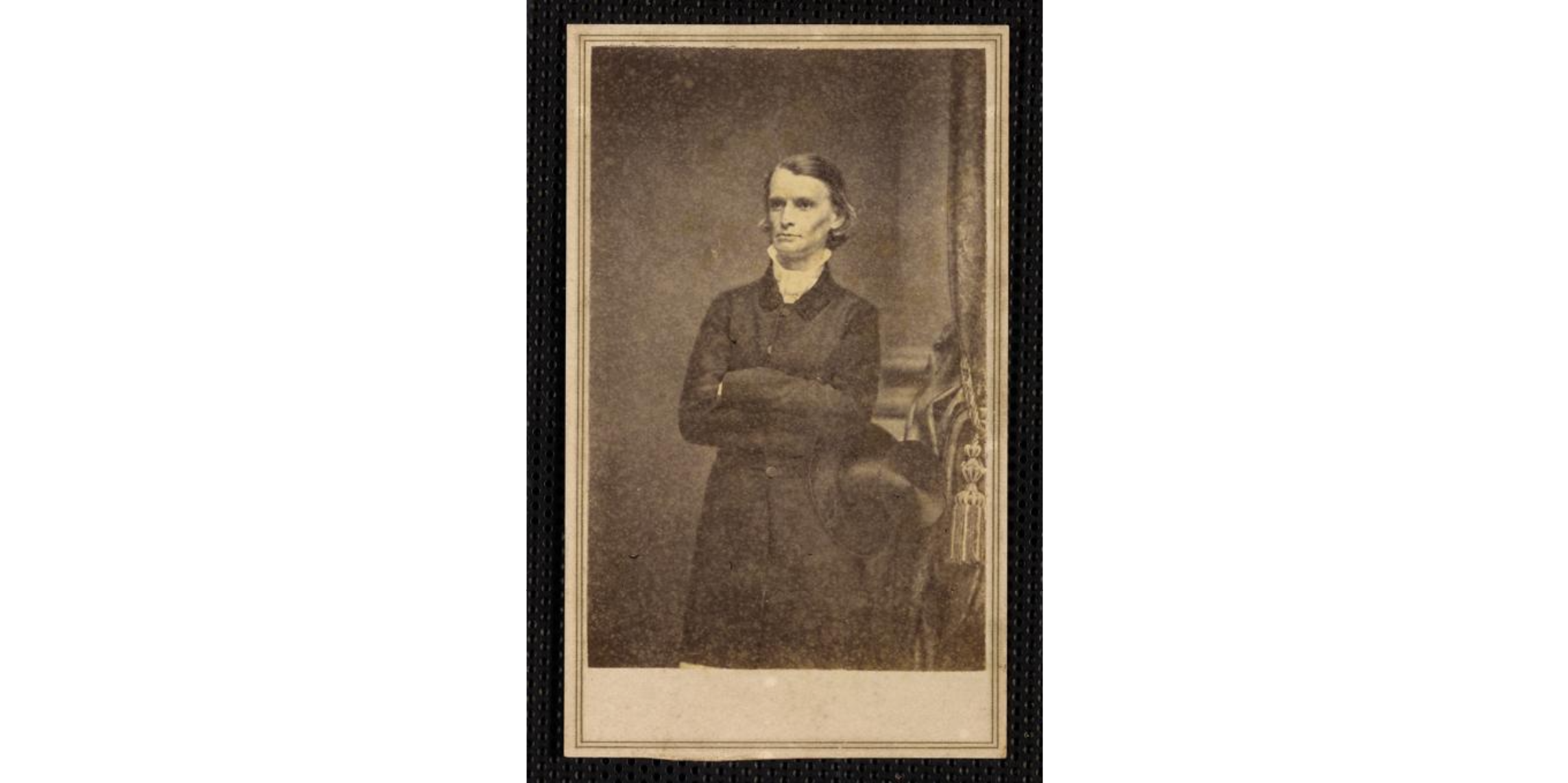
Henry Wise
Library of Congress
At some point, someone said to him: You should be ashamed of yourself. Your constituents should just boot you out. His response, and I’m paraphrasing, was something like: Go ahead, throw me out because you know what my constituents put me here to do that. They put me here to fight in whatever way I need to fight for their rights.
Henry Wise was reelected six times. So he was right; there was an audience and support from Southerners for that kind of behavior.
In any other working environment, you would be fired for this type of behavior. It’s crazy to me that Congress lacks similar rules.
Well, they have the rules. They’re just not enforced.
Exactly.
There’s such a long history of people in government behaving in corrupt and inappropriate ways and having absolutely no accountability for that. What’s happening now is in part because of social media. We see these moments that spread very quickly. There was a similar moment in the late 1840s and early 1850s with the telegraph, when suddenly the entire nation could learn something that happened in Congress within 45 minutes without congressional spin. Suddenly, members of Congress realized that whatever they did, it was going to go out into the world and that they couldn’t control it.
The telegraph meant that whatever happened in Congress became national property very quickly, and that scrambled democratic politics very quickly. We are very much living in a similar moment. Democratic politics relies on communication between the people and those in government, so any form of technology that scrambles that kind of conversation scrambles democracy.
One thing that struck me reading your conversation with my colleague Tim Murphy from a few years agois the idea that, for the most part, people in government making these types of threats don’t truly want to inflict real harm. Has your opinion on that changed since January 6?
I still believe that most of the goals around this type of behavior, both today and in the period I write about, are not to be violent. It’s to frighten people off. To silence them and force them into compliance. As long as the threat is credible, you don’t necessarily have to be violent to have an impact. We are living in such a moment of crisis of accountability, in which no one wants to be held accountable for anything. You have election denial. You have people who feel free to be able to say anything. One of the core components of a democracy is that people with power are held accountable for the ways they use that power. That’s why free and fair elections and voting rights are core elements of a functioning democracy, and we’re watching them get eroded.
How do we separate the performance of violence from actual physical violence?
It’s hard to do. Some of this is and always has been performative, even in the period that I have written about. Back then, they did what they did, and then behind the scenes, they would try and talk things out. The problem right now is you don’t get the sense that there’s a lot of behind-the-scenes going on.
Henry Wise at one point threatened John Quincy Adams during a debate by telling him, “If you weren’t who you are, you would feel more than the force of my words.” (Adams in his diary later wrote, “So Wise, just threatened to kill me!”) But apparently, not long after Wise’s threat, he personally walked over to Adams and asked if they could talk it out. So clearly, some of that was obviously performance to both members of Congress and performance to the public. But right now, I’m not sure that the line is so obvious.
It’s all about manhood and power. The brute force, chest-beating, and threat-tossing. That’s part of what we’re seeing.
The other part of what we’re seeing is that we are in a moment when the people who have power want to keep power and do not respect the rights of people who are not like them. When other people gain power—whether it’s demographically or democratically—they see it as an attack. It doesn’t represent more people having rights. It represents them losing what they feel that they deserve. They feel so absolutely entitled to power and they behave in a way that is manly, that allows them to pose as strong.
But it’s fundamentally a posture of fear and weakness.
PULLMAN – The bass drum sounded like someone dropped a 50-pound dumbbell on the floor. The celebration sounded like they were trying to get a noise complaint. The coach sounded like he had strep throat and the players sounded like they were ready to storm the beaches of Normandy.
The locker room at Gesa Field, the site of Washington State’s 56-14 win over Colorado on Friday night, sounded like the happiest place on earth – and isn’t that what this is all about? Isn’t this supposed to be fun, especially for teams like WSU, which followed a spotless start with a six-game skid?
Isn’t this supposed to be an escape from all the bad stuff – the losing streak and the conference realignment, the uncertain future and the opening of the transfer portal?
For one night, Washington State rendered all of that meaningless. The outside noise was quieter than Colorado’s defensive effort and as trivial as the Buffaloes’ offensive line, which the Cougars torched for five sacks. For one evening, none of it mattered, and the Cougars set themselves up with an opportunity better suited for Hollywood: In next week’s Apple Cup, beat No. 5 Washington, an archrival planning to leave WSU behind, and earn bowl eligibility.
Washington State isn’t there yet, though. For one night, that could wait.
“When you go through stretches like that, it makes these moments even sweeter,” WSU coach Jake Dickert said. “They really are. Our program wanted it so bad for these seniors and these guys for everything that they’ve given us. To see them smile and joy and make plays and have fun, and see a bunch of guys get an opportunity to play – I mean, what a special night on Gesa Field. It really was, and that’s what you’re seeing right there in that locker room.”
The Cougs needed a night like this. They had not won a game in eight weeks. As their losing streak dragged on, their flaws were exposed and their depth was diminished, leaving them looking like one of the Pac-12’s worst teams – if not the worst. Quarterback Cam Ward couldn’t hold on to the ball, or the offensive line couldn’t block, or the defense couldn’t get stops, or some combination surfaced at the worst times.
They looked less like a team that opened with four straight wins and more like one that was ready to get this season over with already.
Then this week happened. On Tuesday, a judge ruled in favor of Washington State and Oregon State, granting the Pac-12’s last two schools control of the conference and its roughly $400 million in assets (Washington State Supreme Court later granted a temporary stay on the decision for at least one month). Three days later, the Cougs embarrassed the Buffaloes, sending their seniors out in such poetic fashion that Disney might have rejected the script for being too cheesy.
Blowout win on senior night? Over one of the teams that left the Cougs behind? With the NCAA president in attendance? With a star defender scoring twice? It sounds more like something on a Hallmark rerun.
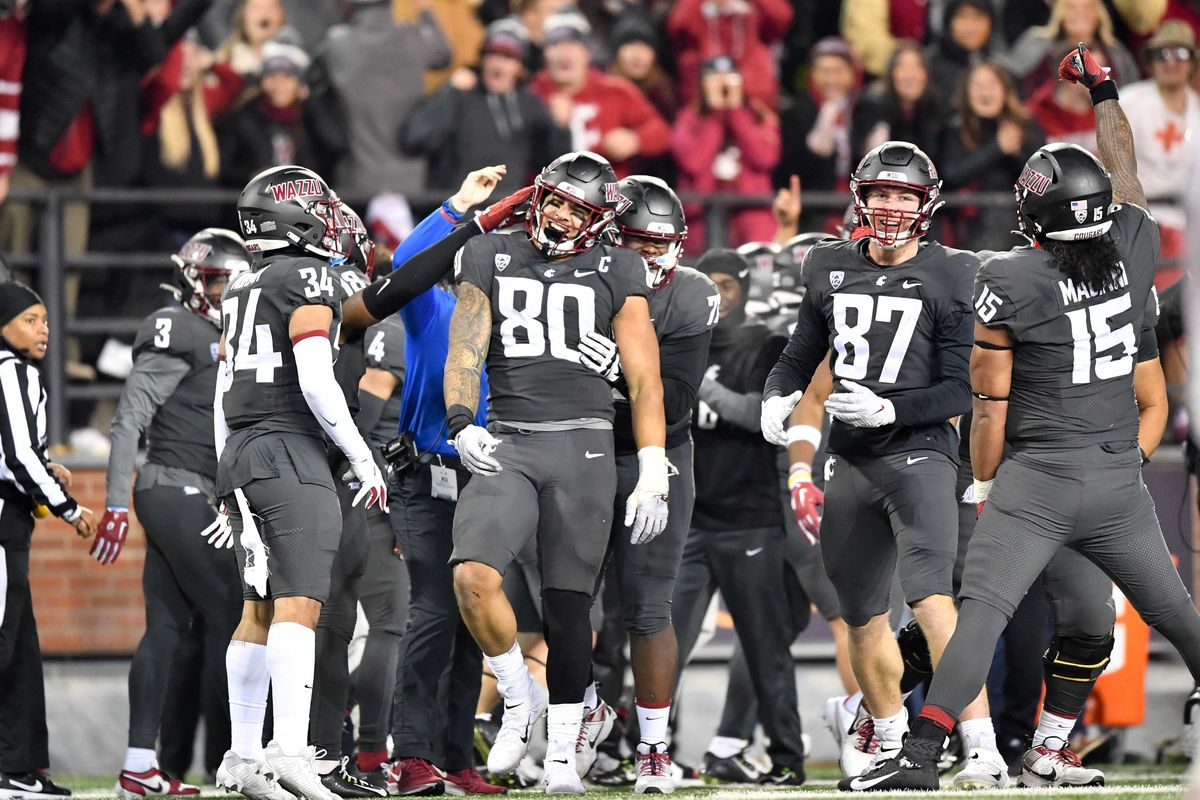
Washington State Cougars defensive end Brennan Jackson (80) reacts after he recoverd the ball and ran for a touchdown during the second half of a college football game against Colorado on Friday, Nov. 17, 2023, at Gesa Field in Pullman, Wash. WSU won the game 56-14. (Tyler Tjomsland/The Spokesman-Review)
“You work through the hard stuff that the past six weeks have been happening,” said receiver Lincoln Victor, who took a handoff for a touchdown rush, “and it’s just great to see all the hard work come to fruition, and it’s great to see everyone have fun and everyone making plays. It’s not just the offense scoring points – special teams making plays, defense getting off the field, and Brennan Jackson scoring two touchdowns. It’s just a great team win.”
These opportunities only come around so often. When they get older, these seniors will be able to get a YMCA membership and play pickup basketball. They’ll be able to join adult softball leagues. They can get into coaching. Heck, maybe they’ll join the pickleball trend.
What they can’t do is play college football again. There are no padded pickup football leagues. In no other walk of life can you throw touchdowns to your college buddies while fans cheer you on. Nothing else offers opportunities like Friday night’s: Strap on the pads and walk out at Gesa Field, play in Washington State’s final home Pac-12 game, and put smiles on the faces of fans who braved the chilly weather – just to see their boys give it one last go.
And did they ever. Edge rusher Ron Stone Jr. recorded his final two sacks in Pullman, one of which gave Jackson the chance to return his first for a score. Running back Nakia Watson looked rejuvenated and energized, like whatever was holding him back for the first 10 games of the season vanished into thin air, allowing him to total 47 rushing yards, his most all season, and catch a touchdown pass. Linebacker Kyle Thornton, as he has most of the year, collected four solid tackles.
Then came the highlights – many highlights. Sophomore Leyton Smithson took a kickoff back 98 yards for a touchdown, the Cougs’ first kickoff return for a score in five years. Ward lobbed one up for receiver Kyle Williams, who beat cornerback Travis Hunter so thoroughly that he immediately held up his wrist, miming CU quarterback Shedeur Sanders’ signature celebration.
Jackson recovered two fumbles for touchdowns. Ward accounted for four of his own. The Cougs weren’t just playing to win. They were playing to make memories, and the ones they made on Friday night they’ll cherish until they’re old and gray and boring their grandkids with their stories.
“I love this team. That’s the reason I’m back,” Stone said. “Just this opportunity to go out with these guys. These are my brothers, man. These are gonna be guys that I’m gonna talk to for the rest of my life. So just really everything. I love Martin Stadium. I love the Cougar prowl. I think that’s fantastic. I mean, every bit of it. So… all of it. I’m a Coug through and through. I’ve come back for six years. At this point, you know, there’s no other choice but to love it.”
The way our cricket team has dominated the World Cup should inspire the concerted pursuit of excellence in other fields too. Both by India and by Indians
I remember watching the India-West Indies series as a child. The year was 1983. I, along with some friends, had a magnetic scoreboard that we would keep updating as we watched the match on TV. In the first Test itself, West Indies crushed us. They made 454 in the first innings. When India came to bat, we lost two wickets (Sunil Gavaskar and Mohinder Amarnath) for no runs.
The West Indian bowlers were so fast and fierce, they seemed from a different planet, compared to our gentlemen batsmen. India went on to lose the match, an innings defeat. My friends and I cried as we continued to change the magnetic numbers on our toy scoreboard. India went on to lose the Test series 3-0, and the one-day series 5-0.
PULLMAN — The bass drum sounded like someone dropped a 50-pound dumbbell on the floor. The celebration sounded like they were trying to get a noise complaint.
The locker room at Gesa Field, the site of Washington State’s 56-14 win over Colorado on Friday night, sounded like the happiest place on the face of the earth — and isn’t that what this is all about? Isn’t this supposed to be fun, especially for teams like WSU, which followed a spotless start with a six-game skid?
Isn’t this supposed to be an escape from all the bad stuff — the losing streak and the conference realignment, the uncertain future and the opening of the transfer portal?
For one night, Washington State rendered all of that meaningless, as pointless as Colorado’s defensive effort and as trivial as the Buffaloes’ offensive line, which the Cougars torched for five sacks. For one evening, none of it mattered, and the Cougars set themselves up with an opportunity better suited for Hollywood: In next week’s Apple Cup, beat No. 5 Washington, one of the schools that conspired to leave WSU behind, and earn bowl eligibility.
Washington State isn’t there yet. For one night, that could wait.
“When you go through stretches like that, it makes these moments even sweeter,” WSU coach Jake Dickert said. “They really are. Our program wanted it so bad for these seniors and these guys for everything that they’ve given us. To see them smile and joy and make plays and have fun, and see a bunch of guys get an opportunity to play — I mean, what a special night on Gesa Field. It really was, and that’s what you’re seeing right there in that locker room.”
The Cougs needed a night like this. They had not won a game in eight weeks. As their losing streak dragged on, their flaws were exposed and their depth was diminished, leaving them looking like one of the Pac-12’s worst teams — if not the worst. Quarterback Cam Ward couldn’t hold on to the ball, or the offensive line couldn’t block, or the defense couldn’t get stops, or some combination surfaced at the worst times.
They looked less like a team that opened with four straight wins and more like one that was ready to get this season over with already.
Then this week happened. On Tuesday, a judge ruled in favor of Washington State and Oregon State, granting the Pac-12’s last two schools control of the conference and its roughly $400 million in assets. Three days later, the Cougs embarrassed the Buffaloes, sending their seniors out in such poetic fashion that Disney might have rejected the script for being too cheesy.
Blowout win on senior night? Over one of the teams that left the Cougs behind? With the NCAA president in attendance? With a star defender scoring twice? It sounds more like something on a TLC rerun.
“You work through the hard stuff that the past six weeks have been happening,” said receiver Lincoln Victor, who took a handoff for a touchdown rush, “and it’s just great to see all the hard work come to fruition, and it’s great to see everyone have fun and everyone making plays. It’s not just the offense scoring points — special teams making plays, defense getting off the field, and Brennan Jackson scoring two touchdowns. It’s just a great team win.”
These opportunities only come around so often. When they get older, these seniors will be able to get a YMCA membership and play pickup basketball. They’ll be able to join adult softball leagues. They can get into coaching. Heck, maybe they’ll join the pickleball trend.
What they can’t do is play college football again. There are no padded pickup football leagues. In no other walk of life can you throw touchdowns to your college buddies while fans cheer you on. Nothing else offers opportunities like Friday night’s: Strap on the pads and walk out at Gesa Field, play in Washington State’s final home Pac-12 game, and put smiles on the faces of fans who braved the chilly weather — just to see their boys give it one last go.
And did they ever. Edge rusher Ron Stone Jr. recorded his final two sacks in Pullman, one of which gave Jackson the chance to return his first for a score. Running back Nakia Watson looked rejuvenated and energized, like whatever was holding him back for the first 10 games of the season vanished into thin air, allowing him to total 47 rushing yards, his most all season, and catch a touchdown pass. Linebacker Kyle Thornton, as he has most of the year, collected four solid tackles.
Then came the highlights — boy, the highlights. Sophomore Leyton Smithson took a kickoff back 98 yards for a touchdown, the Cougs’ first kickoff return for a score in five years. Ward lobbed one up for receiver Kyle Williams, who beat cornerback Travis Hunter so thoroughly that he immediately held up his wrist, miming CU quarterback Shedeur Sanders’ signature celebration.
Jackson recovered two fumbles for touchdowns. Ward accounted for four of his own. The Cougs weren’t just playing to win. They were playing to make memories, and the ones they made on Friday night they’ll cherish until they’re old and gray and boring their grandkids with their stories.
“I love this team. That’s the reason I’m back,” Stone said. “Just this opportunity to go out with these guys. These are my brothers, man. These are gonna be guys that I’m gonna talk to for the rest of my life. So just really everything. I love Martin Stadium. I love the Cougar prowl. I think that’s fantastic. I mean, every bit of it. So … all of it. I’m a Coug through and through. I’ve come back for six years. At this point, you know, there’s no other choice but to love it.”
Greg Woodson Twitter: @GregWWoods.Washington State beat writer for The Spokesman-Review







The opinions expressed in reader comments are those of the author only and do not reflect the opinions of The Seattle Times.