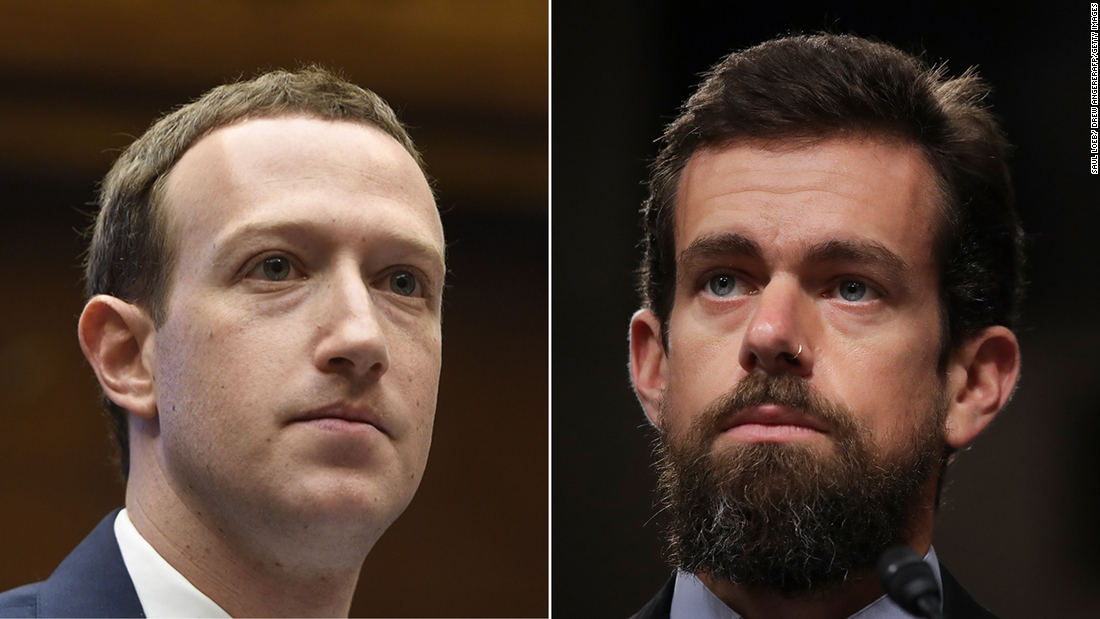
The announcement about the lawsuits comes after the companies removed Trump's access to their platforms in the aftermath of the January 6 riot on Capitol Hill. Twitter banned Trump altogether, and he is currently suspended from Facebook for at least two years. YouTube also suspended Trump in January, but it said in March that his account would be reinstated when the company is confident that the risk of violence has receded.
Tech companies have consistently rejected claims that their platforms discriminate based on partisan ideology. Independent studies have not corroborated such accusations, and several have found that partisan voices, particularly on the right, are among the most engaged-with on the platforms.
Trump's suits continue a trend that began during his presidency: Throwing the book against companies he perceives to be a threat to his political brand. Last spring, while he was still in office, Trump signed an executive order aimed at "preventing online censorship" and seeking to expand legal liability for tech companies.
But the tech companies are legally permitted to run their platforms as they see fit, and courts have dismissed a string of similar lawsuits. Facebook, Twitter and YouTube all cited the potential for future incitement of violence or risks to public safety following the Capitol riot in announcing their decisions to remove Trump's accounts.
Trump announced the suits during a press conference Wednesday, saying that he is asking a court in Florida "to order an immediate halt to social media companies' illegal, shameful censorship of the American people."
"We're going to hold big tech very accountable," he said. During the nearly hour-long event, Trump and others involved in the effort made grandiose claims about the potential for the lawsuits that are likely at odds with the suits' potential for success.
Less than an hour after the event, Trump's team began sending out fundraising appeals related to the lawsuits, and the website recruiting participants for the proposed class action suits also featured a link to donate.
The complaints against Twitter, Facebook and YouTube claim that the platforms' removal of Trump amounts to censorship and allege that the decisions violate his First Amendment right to free speech. Such actions by the companies have previously been protected under Section 230 of the Communications Act of 1934, a federal law that provides legal immunity to websites that moderate user-generated content, and has been used by tech platforms to nip many lawsuits in the bud.
"Plaintiff respectfully asks this Court ... to prohibit Defendants from exercising censorship, editorial control, or prior restraint in its many forms over the posts of President Trump and Putative Class Members," the Twitter complaint states. (A court still must certify that each of the lawsuits can proceed as a class action.)
The complaints also take issue with the way that the platforms attempted to address the spread of misinformation about the Covid-19 pandemic, including by leaning on the CDC, an organization Trump clashed with as president and which the suit claim has a "highly questionable reputation."
Among the relief requested by the suits is an order that the social media companies immediately reinstate the accounts of Trump and other members of the proposed class action suit removed from the platforms, an order requiring the social media companies to remove warning labels on Trump's posts and a judgment declaring Section 230 unconstitutional.
Prior legal efforts against Big Tech
The push to bring legal action against tech platforms over bias allegations has spread nationwide. In May, Florida passed a law allowing politicians that have been suspended or removed from social media to sue those companies.
But the effort has run up against the realities of current law — and the Constitution. Last week, a federal judge blocked Florida's law from going into effect, saying government attempts to force social media companies to host political speech violates the First Amendment. (Florida Gov. Ron DeSantis has vowed to appeal.)
The judge's ruling also said the Florida law ran counter to Section 230, which Trump had sought to weaken with his executive order.
In Congress, numerous bills have been proposed to narrow the scope of Section 230, including by some Democrats who believe tech companies are not doing enough to curb hate speech and harassment online.
But much of the momentum for changing Section 230 has come from Republicans upset about how social media companies have enforced their rules when conservatives have broken them. Trump, in his order, accused tech companies of "engaging in selective censorship that is harming our national discourse," and pushed for the Federal Communications Commission to "clarify" Section 230.
Legal experts and FCC officials themselves questioned the agency's authority to do that, citing the same First Amendment issues that tied up the Florida law. President Joe Biden later rescinded Trump's order.
Now, having failed to turn the machinery of the US government against the tech industry, Trump is trying to get at it through the courts himself. But with Section 230 still on the books, it's unclear how he could succeed.
"here" - Google News
July 08, 2021 at 12:41AM
https://ift.tt/3qR48V7
Trump is suing Mark Zuckerberg and Jack Dorsey. Here's why they shouldn't worry - CNN
"here" - Google News
https://ift.tt/2z7PfXP
https://ift.tt/2Yv8ZPx


No comments:
Post a Comment